Buyers check codes, processes and whether you can repeat it
Companies outsourcing welded parts look for process range, certifications and repeatability: robotic cells for volume, skilled welders for complex work. Your website should show both.
They check processes (MIG, TIG, stick, flux-core, submerged arc, robotic and resistance welding), materials and thickness ranges, and certifications such as AWS D1.1 for structural steel, D1.2 for aluminum, D1.6 for stainless and ASME Section IX for pressure work. For production work, they look at fixturing, robotic cells and capacity.
They also check what happens around the weld: cutting and forming before it, inspection and testing after it, and machining, finishing and assembly, so they receive a finished part.
Who buys this work
Contract welding shops build frames, weldments, structures, tanks and assemblies for equipment makers, energy, construction, transportation and agriculture. Buyers range from OEMs outsourcing production weldments to engineers who need a one-off fixture or repair.
Production buyers want consistency and capacity. One-off buyers want skill and speed. Both look online, and many search for welding shops near their plant, so local search matters.
Questions buyers ask, answered before they ask
Which processes and materials do you weld, and what thickness range? Which codes are your welders and procedures certified to? Can you run production weldments with fixtures or robots, and how many a week? Do you machine, finish and assemble after welding? How do you inspect and document welds? Answering these separates you from shops that only do repairs.
Few welding shops put their certifications where buyers can see them
Most welding shops never list the codes their welders are certified to, so buyers can't count them.
Across the 4,547 core job shops and OEMs in our review, only 97 mentioned AWS welding certifications on the pages we read, and 56% showed no visible way to request a quote. Certified welders and qualified procedures are a real advantage. If they're not on your website, buyers can't count them.
Welding shops often list processes but not codes, materials or thickness ranges, so a buyer can't tell if you can weld their aluminum frame to D1.2 or their pressure part to Section IX.
The other gap is production capacity. Buyers outsourcing production weldments need to know about fixturing, robotic cells and how many parts a week you can deliver. Without it, they assume you're a repair shop.
Source: RFQ Foundry review of 12,382 US metalworking and manufacturing websites, Oct to Nov 2026. Core figures cover the 4,547 job shops and OEMs selling to other businesses. We read each homepage plus up to two About, Capabilities or Services pages. Read the report.
What we build and run for you
A page for each welding process and material.
A certifications page listing every code and procedure, written out in full.
Capacity pages for production welding and large weldments, with fixturing and robotic cells.
Local SEO that puts you in front of buyers near you, and an RFQ form that takes drawings and photos for repair work.
Monthly articles on the Manufacturers and OEMs package, such as designing weldments for robotic welding, choosing a process for aluminum, and what code certification means for a part.
Articles we'd write in your first three months
Typical articles we'd publish in your first three months, chosen from what buyers of this work search for. Each one ends with a quote prompt:
- Designing weldments for robotic welding
- Choosing a welding process for aluminum, stainless and steel
- What AWS D1.1 certification means for your part
- Weld inspection methods compared
- Outsourcing production welding: what to ask a supplier
What a page like this looks like
The Full Circle concept on this page includes a page for its certified welding, explaining what the certification covers and why it matters to buyers. A welding shop site built the same way gives each code and process its own page.
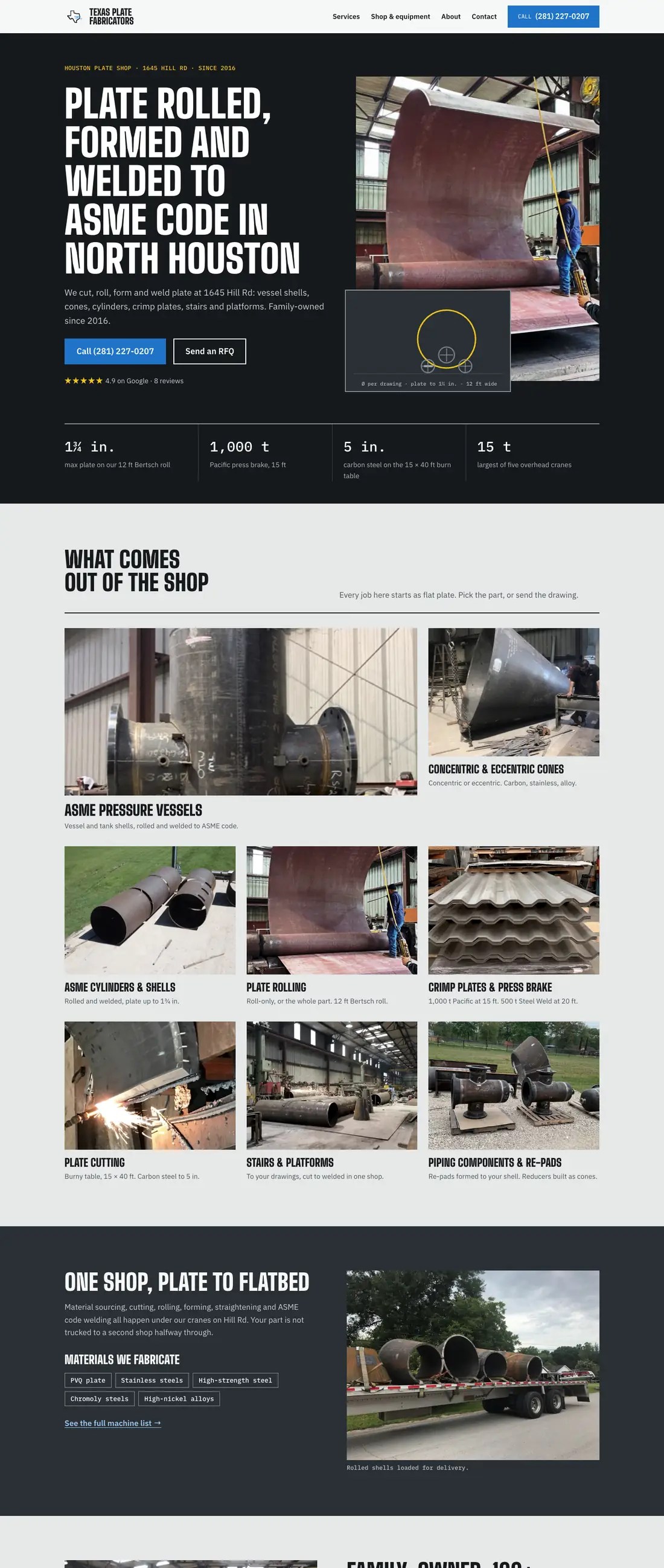
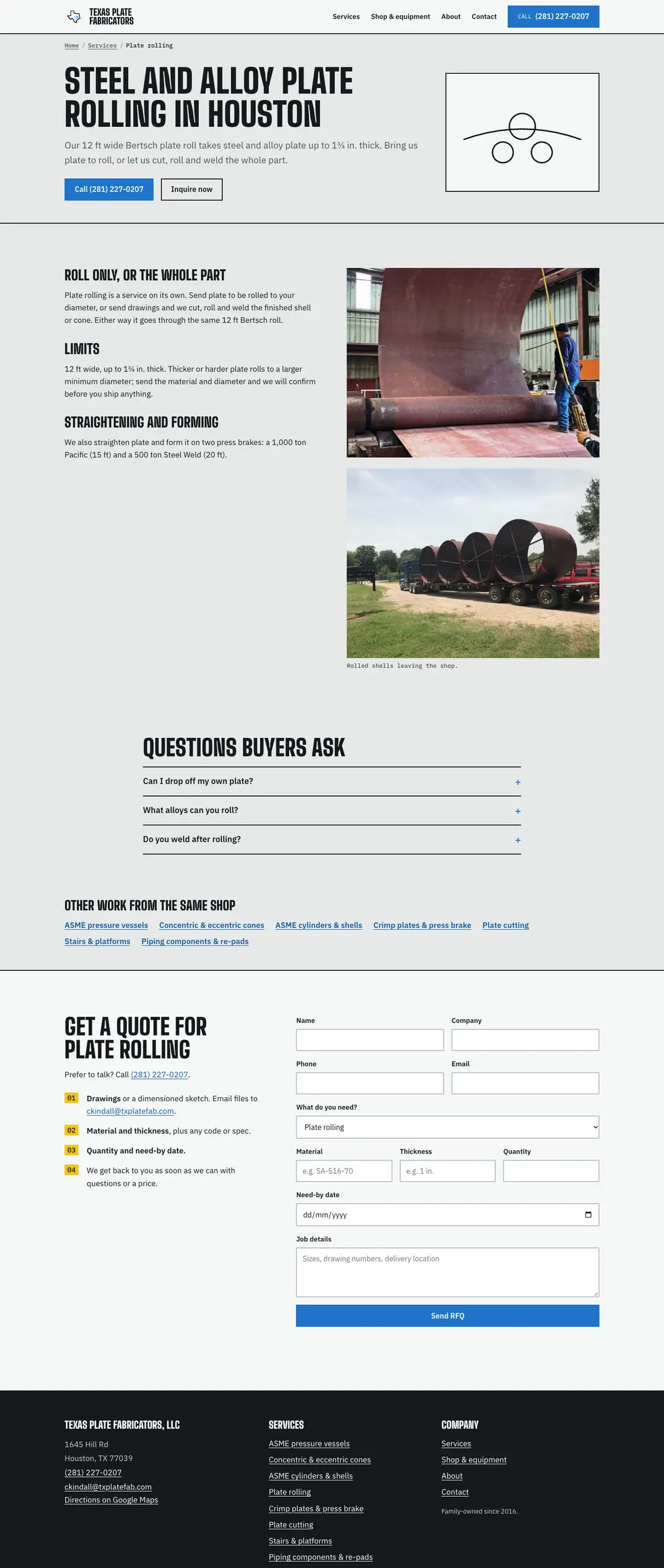
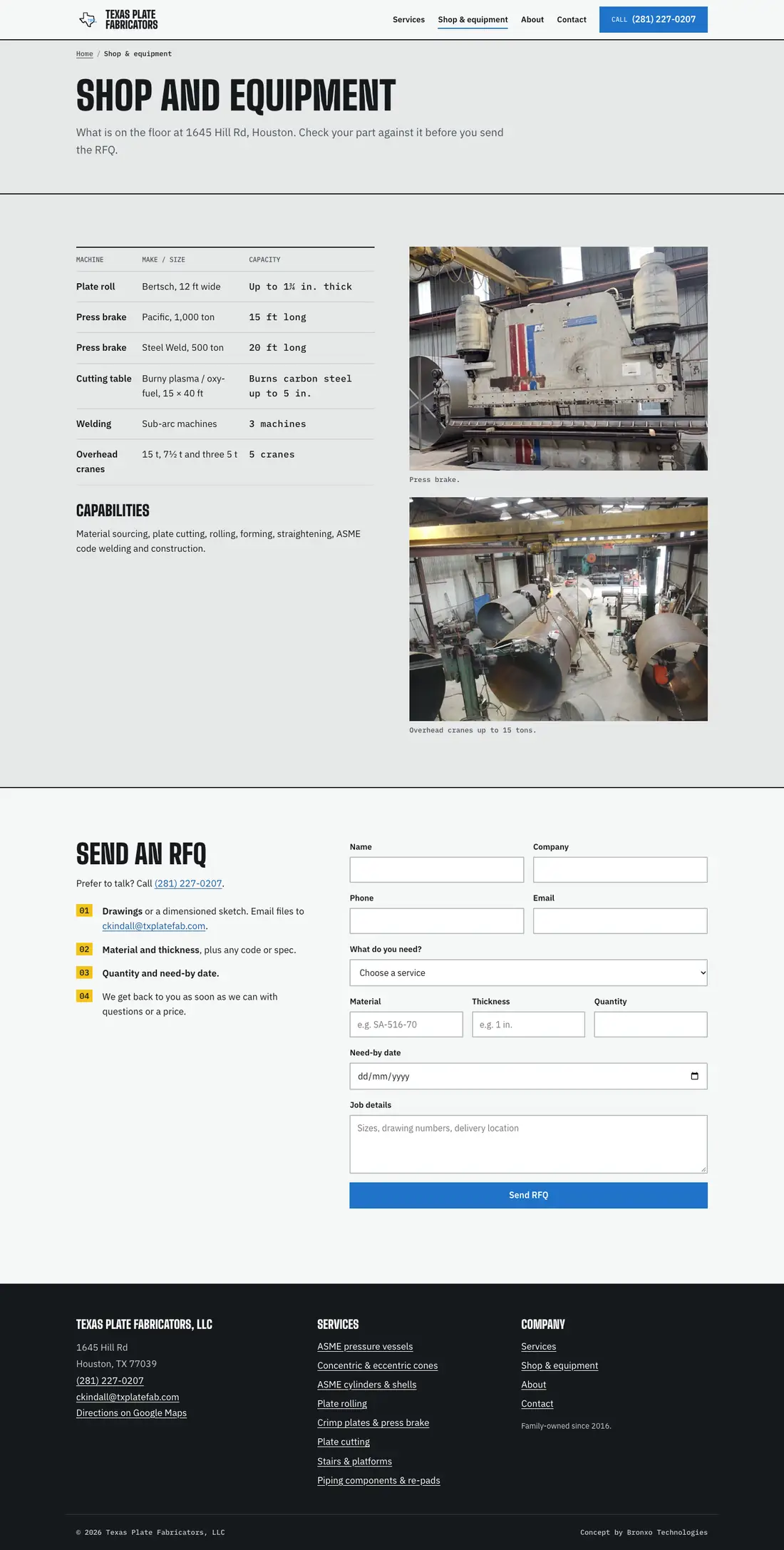
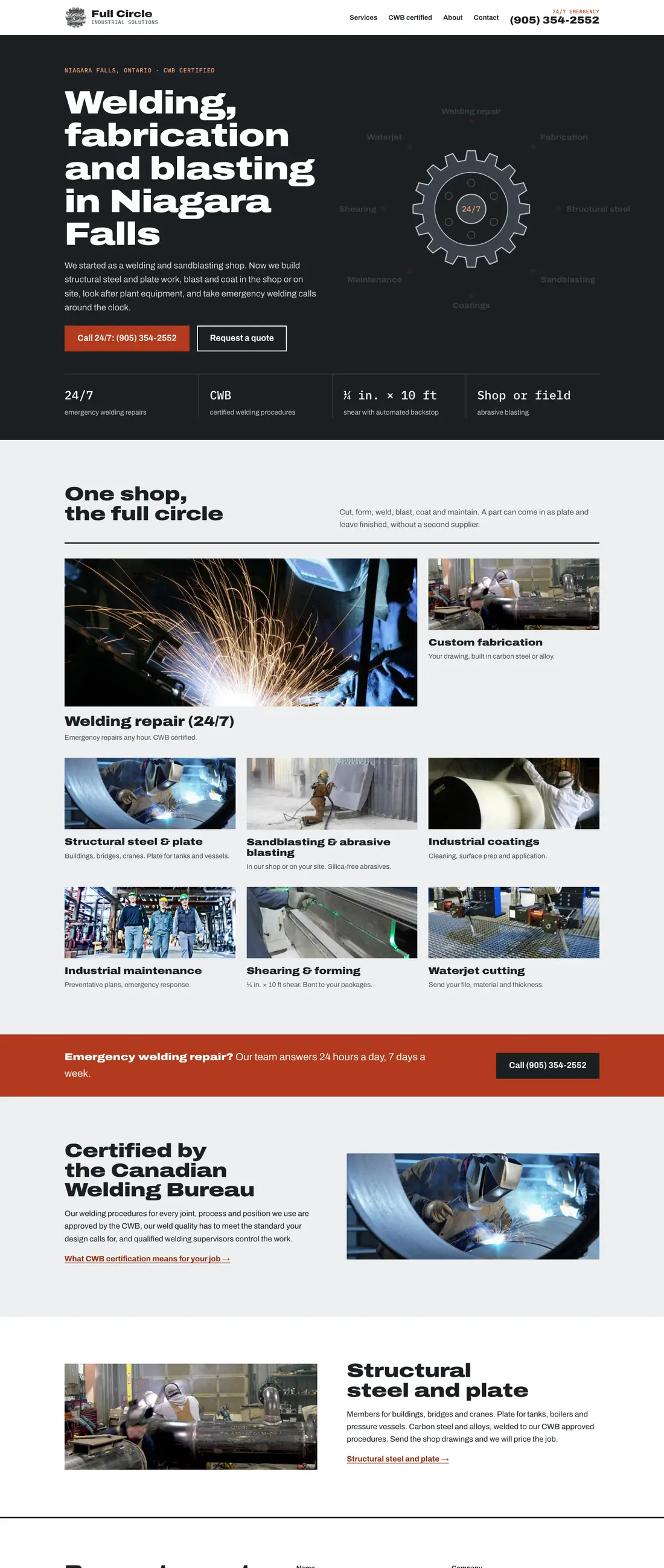
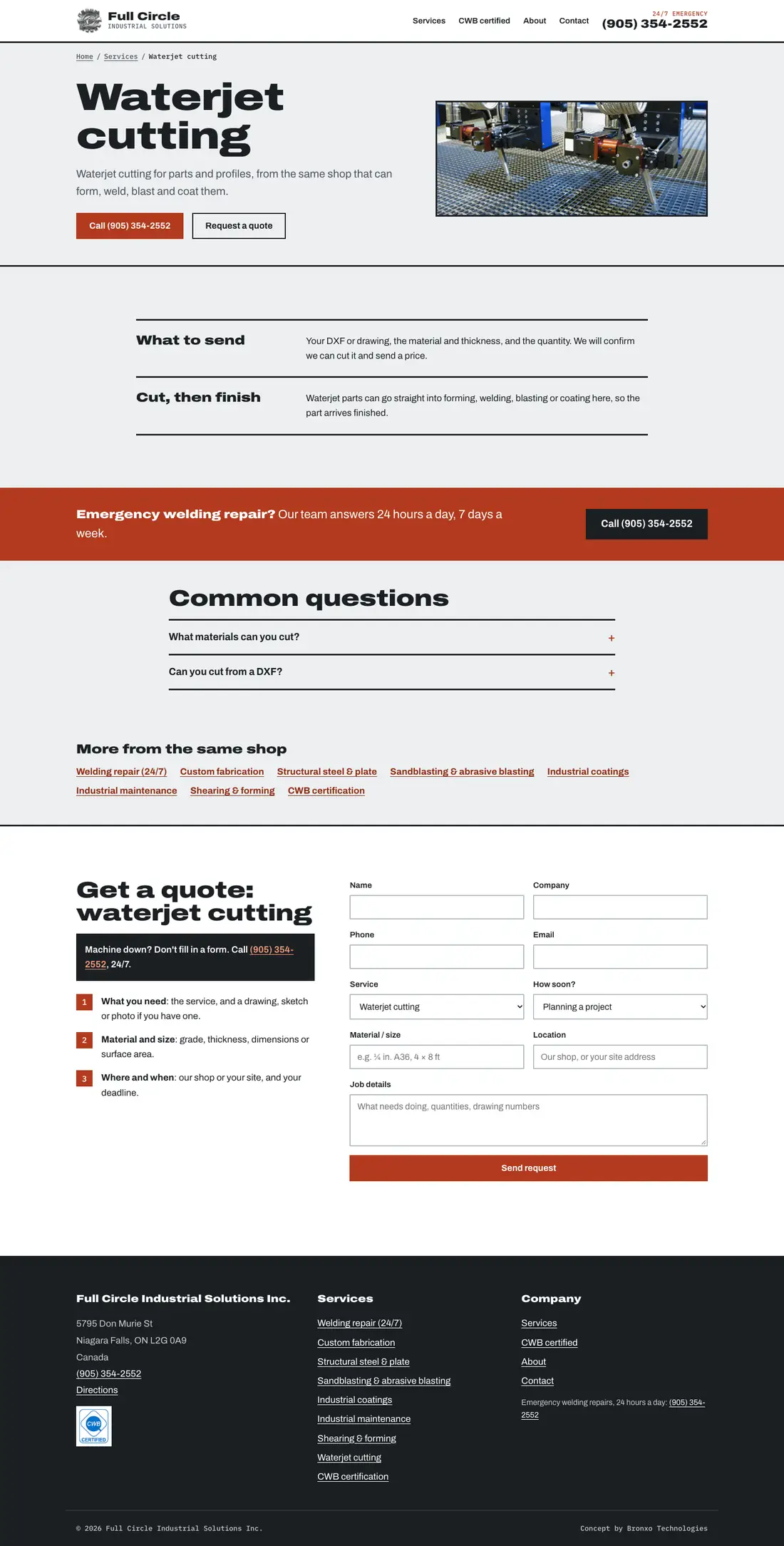
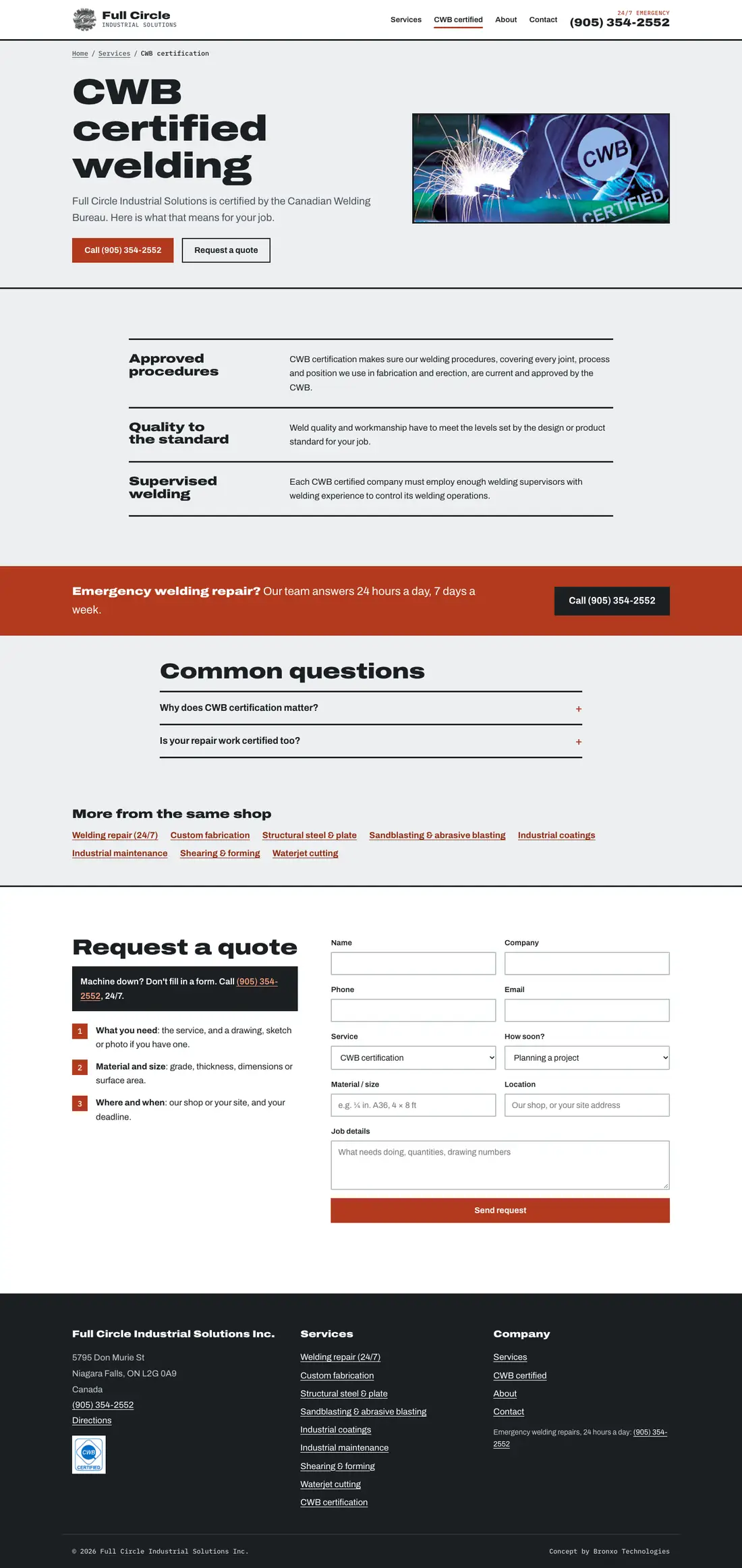
Concept redesigns we built from each company's own public website, to show the kind of site we make. Not client work. See them live: Texas Plate concept · Full Circle concept
Where to start: three fixes for this quarter
If you only do three things this quarter: publish a certifications page with every code and procedure, write a page about production welding and fixturing, and add a repair page with a phone number. Few welding shops we review do all three.
You'll see which pages bring in work
Every RFQ is captured by the RFQ Engine and tagged with its source. Your RFQ Report shows which capability pages, searches and campaigns bring in work, how fast your team replied and how many quotes you won. We agree an RFQ goal in month one and report against it.
Questions
We also do field and repair welding. Should that be on the same site?
Yes, on its own page. Repair buyers search differently and often call, so a clear phone number matters most there.