Buyers judge turning shops on diameter, tolerance and volume
Turned parts are bought on diameter range, tolerance and volume. Buyers need those numbers on your website, not buried in a brochure.
They check bar capacity and part length for each machine type: Swiss-type, multi-spindle and CNC lathe. They check axes and live tooling stations, because those decide which features you can finish in one setup. They look at materials, from free-machining steels and brass to stainless, titanium and plastics, and the tolerances and finishes you hold at volume.
Secondary operations matter too: cross-drilling, milling, threading, deburring, heat treating and plating, in-house or managed through partners. Then quality: inspection methods for high volumes, and experience with annual volumes and blanket orders.
Who buys this work
Swiss-type and multi-spindle shops make small, precise parts in volume: pins, shafts, fasteners, connectors, valve components, bone screws and countless others. Buyers are OEMs in medical devices, aerospace, electronics, fluid power and automotive, plus distributors who resell specialty parts.
These buyers often place blanket orders and keep suppliers for years, so each new account is valuable. They find suppliers through associations, referrals and search, usually starting with the material, diameter and tolerance they need.
Questions buyers ask, answered before they ask
What diameter range and part length can you run? How many axes and live tools do your Swiss machines have? Which materials do you stock? What annual volumes can you support? Which secondary operations do you manage for us? A website that answers these lets a buyer qualify you in minutes.
Most turning shops say "precision machining" and stop there
Most turning shops don't publish bar capacity, part length or volume range, so buyers can't tell if they're a fit.
In our review of 4,547 job shop and OEM websites, 56% showed no visible way to request a quote and 69% named no certification on the pages we read. A buyer looking for a 6 mm stainless part in 50,000-piece lots needs to know within seconds whether you're a fit. Most turning websites don't tell them.
Turning shops often call themselves "precision machining" without saying they specialise in turned parts at volume, so buyers searching for Swiss turning or screw machine work never find them. Others list machines by brand only, without bar capacity, part length or axes.
Secondary operations are another gap. Buyers want finished parts. A shop that manages heat treating, plating and inspection for them saves real work, but if that isn't on the website, buyers assume they'll manage it themselves.
Source: RFQ Foundry review of 12,382 US metalworking and manufacturing websites, Oct to Nov 2026. Core figures cover the 4,547 job shops and OEMs selling to other businesses. We read each homepage plus up to two About, Capabilities or Services pages. Read the report.
What we build and run for you
A page for each turning process you run, with bar capacity, part length, axes and live tooling, materials and tolerances in plain numbers.
A secondary operations page that shows buyers they'll receive finished parts.
A quality page covering inspection for volume production and your certifications.
Monthly articles on the Manufacturers and OEMs package, such as Swiss turning versus conventional CNC turning, material choices for small precision parts, and how to design turned parts that cost less.
Articles we'd write in your first three months
Typical articles we'd publish in your first three months, chosen from what buyers of this work search for. Each one ends with a quote prompt:
- Swiss turning or conventional CNC turning: which suits your part?
- Material choices for small precision parts
- Designing turned parts for lower cost at high volume
- Blanket orders explained: how they help you and your supplier
- Secondary operations we manage so you receive finished parts
What a page like this looks like
The concept sites on this page show our approach: a page per capability, real capacities in a table, and a quote path on every page. For a turning shop, the same table lists bar capacity, part length and axes for each machine.
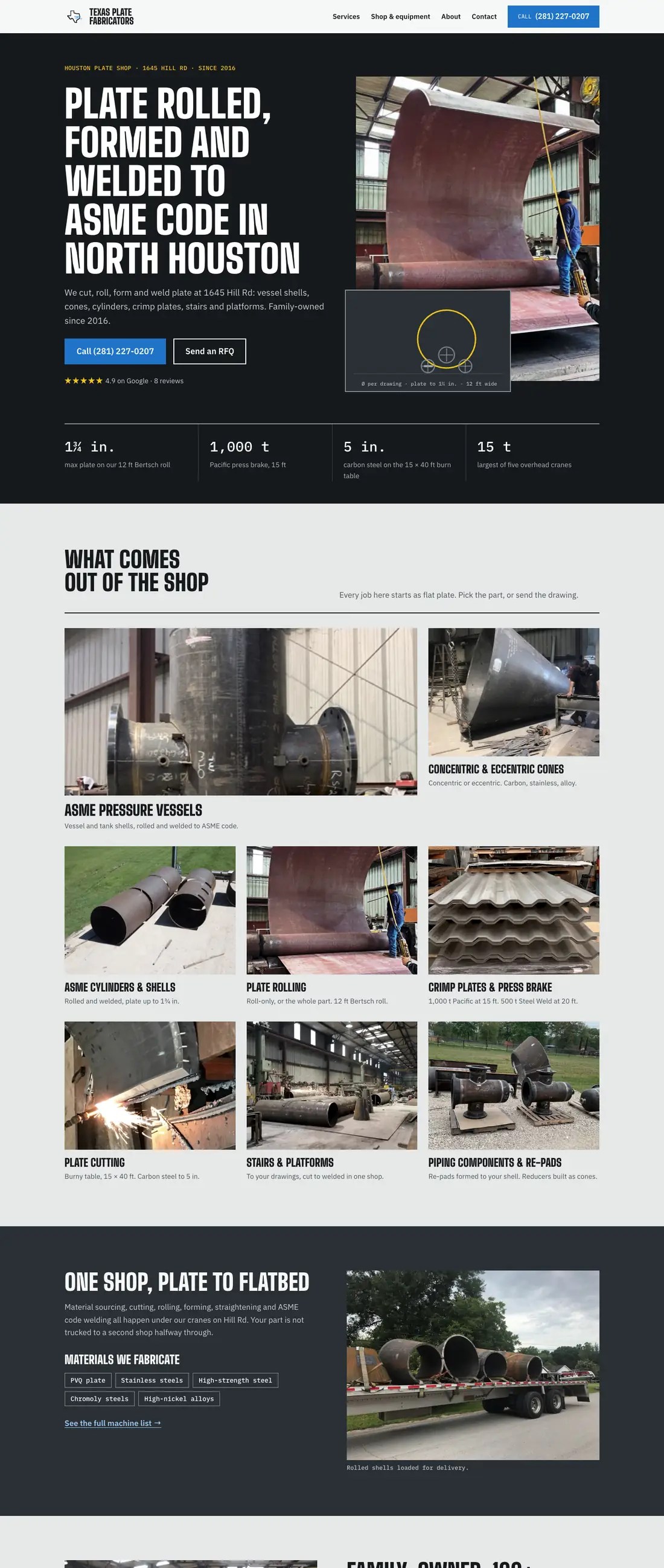
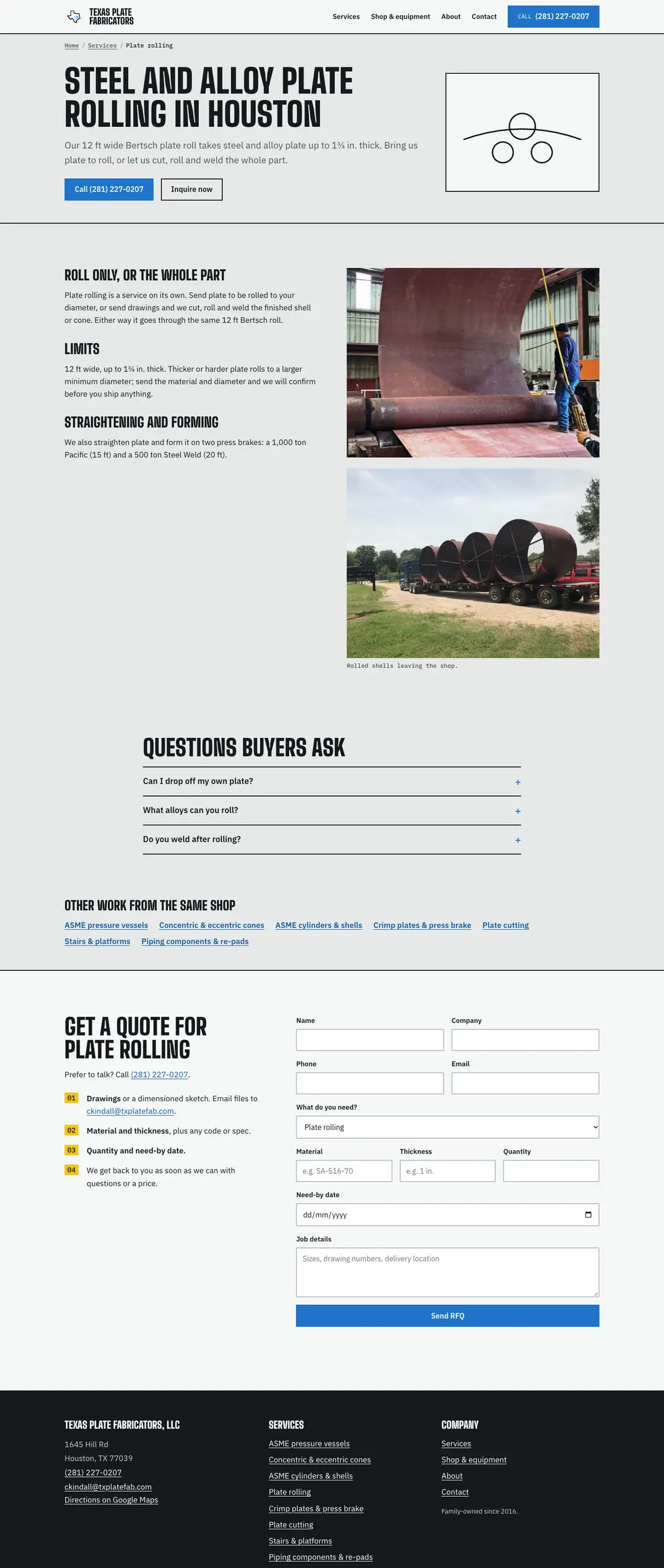
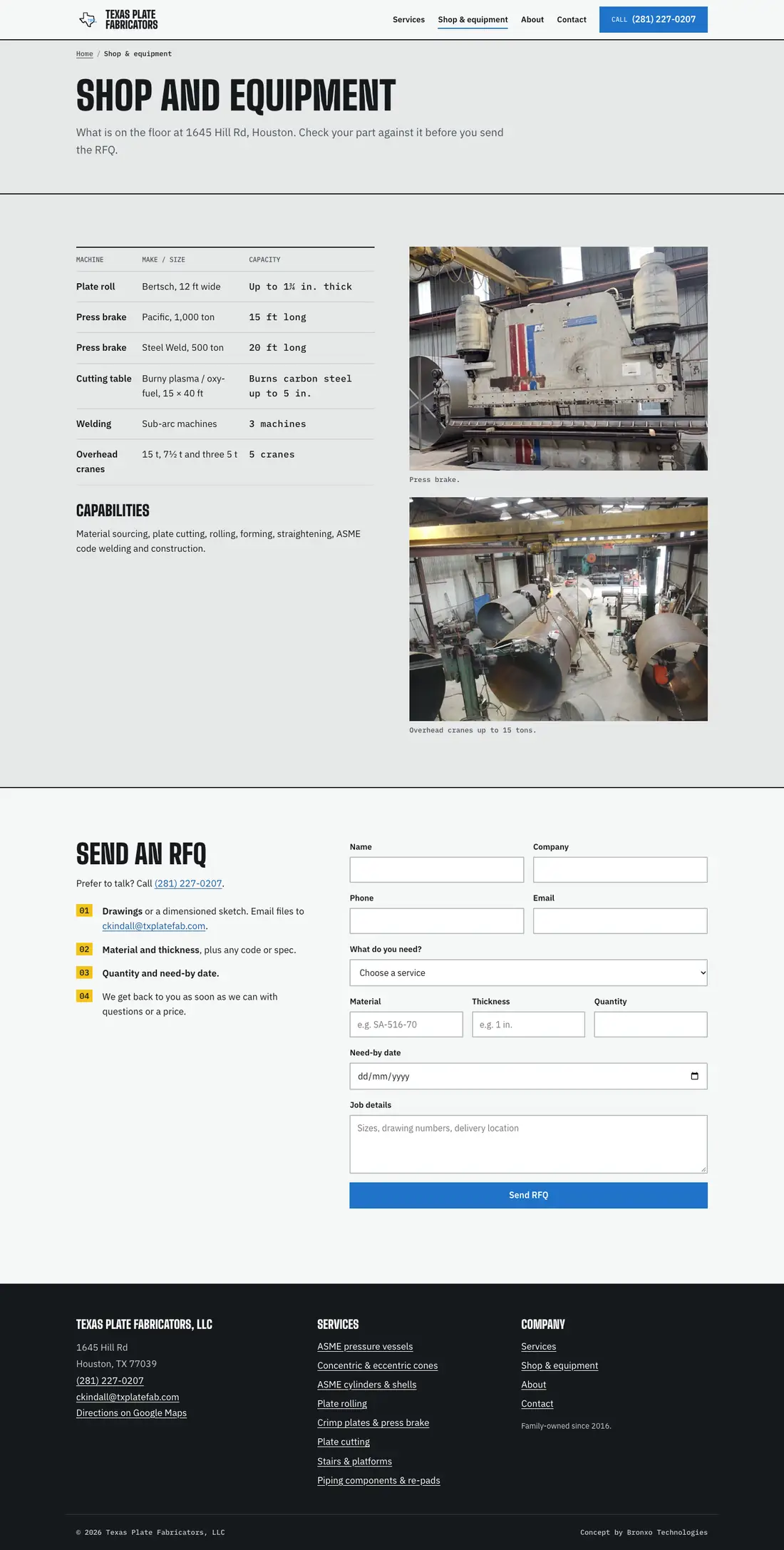
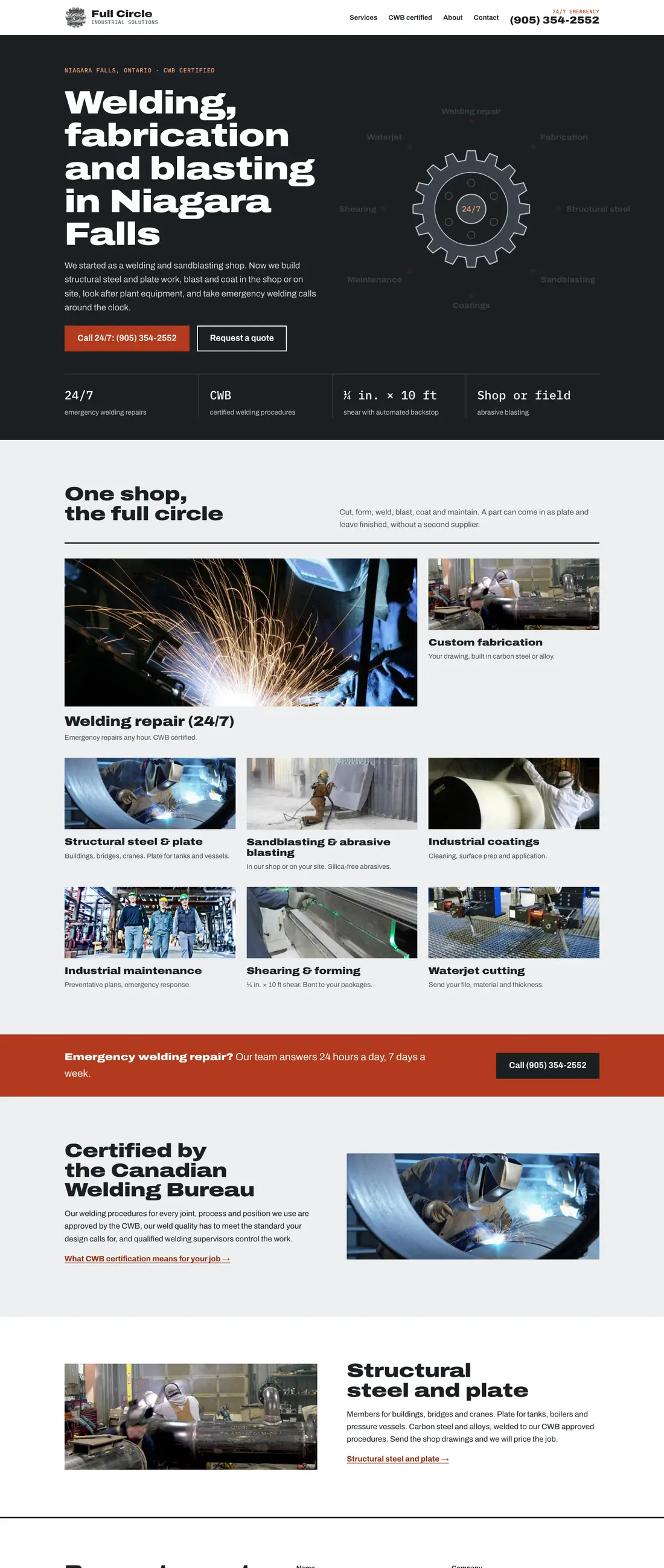
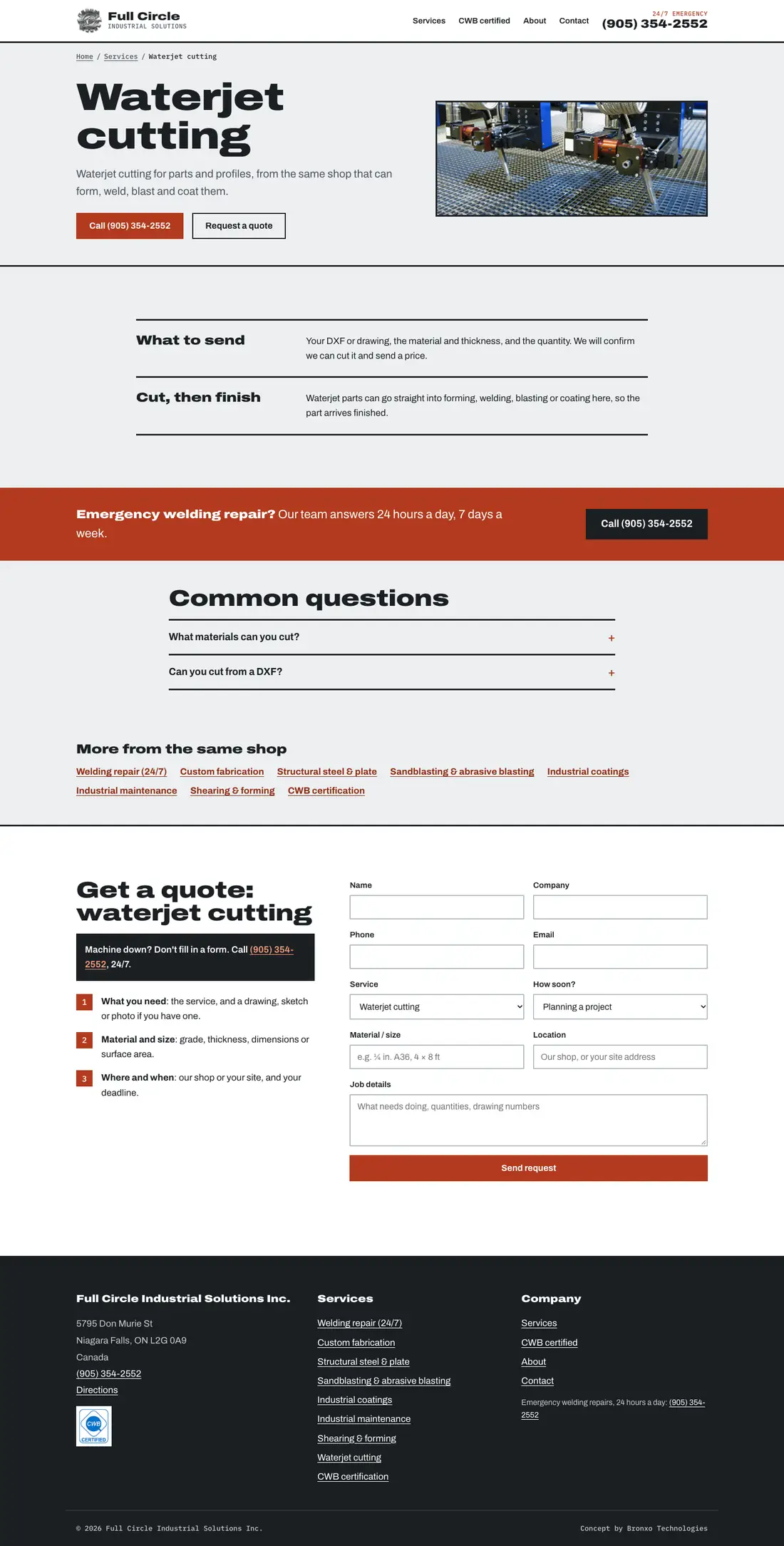
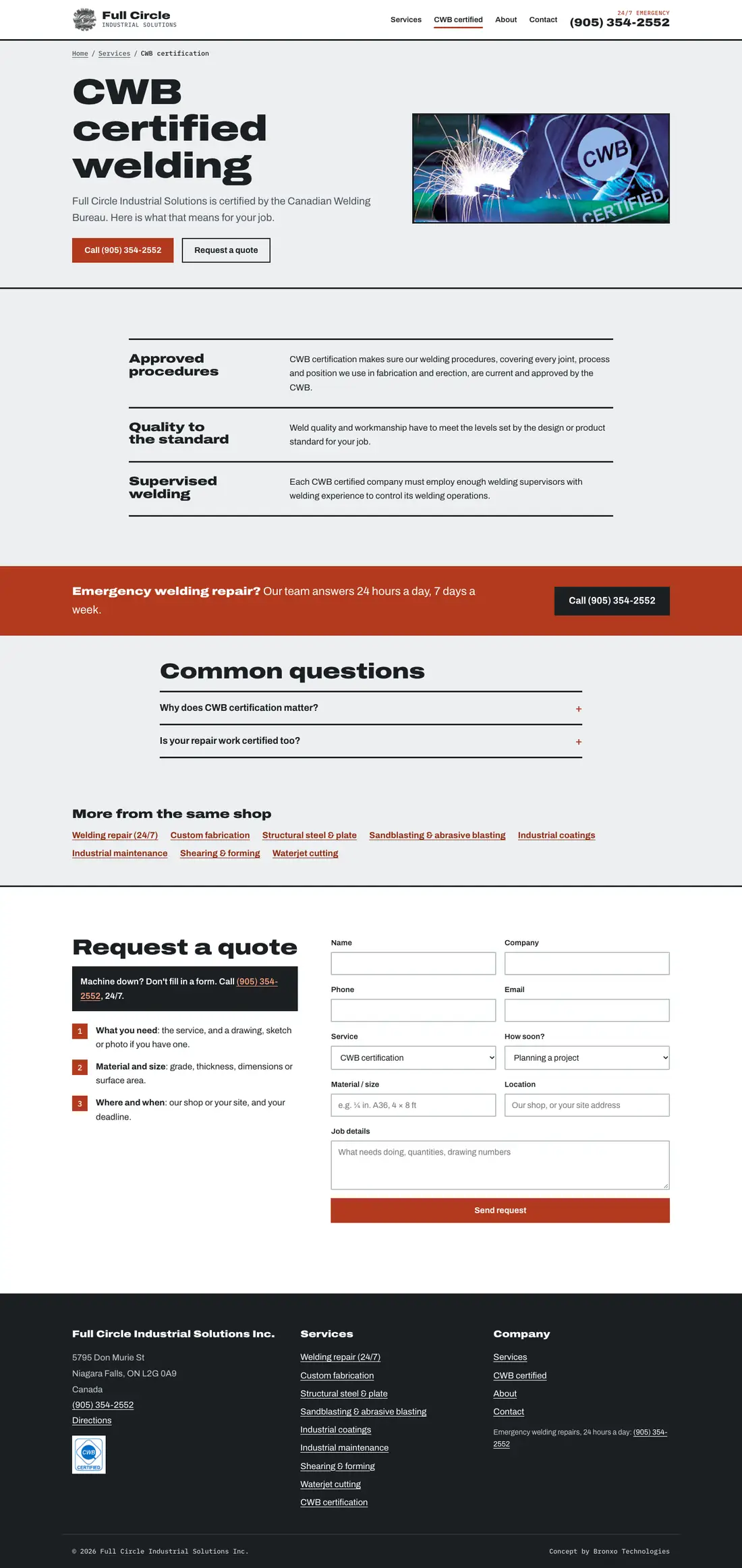
Concept redesigns we built from each company's own public website, to show the kind of site we make. Not client work. See them live: Texas Plate concept · Full Circle concept
Where to start: three fixes for this quarter
If you only do three things this quarter: say "Swiss turning" or "turned parts" in your homepage headline, list bar capacity and part length for every machine, and add a page on the secondary operations you manage.
You'll see which pages bring in work
Every RFQ is captured by the RFQ Engine and tagged with its source. Your RFQ Report shows which capability pages, searches and campaigns bring in work, how fast your team replied and how many quotes you won. We agree an RFQ goal in month one and report against it.
Questions
Do turned-parts buyers really search online?
Engineers and buyers adding a new source very often do, and they also use AI tools to shortlist suppliers. A clear website is how you get on that shortlist.