Engineers want three answers: tolerance, size and material, and date
A website that answers all three in numbers wins more RFQs than one that says "precision machining" and stops.
They look at your machine list first, and want specifics: make and model, number of axes, work envelope or bar capacity, spindle speeds and automation such as pallet systems. They check the materials you run every week and the tolerances and finishes you hold every day, not on your best day.
Then they check quality: CMMs and other inspection, first article inspection, certifications and documentation. Then proof you've done similar work, such as the industries you serve, example parts you're allowed to show, and lot sizes from prototype to production. Finally: can they upload a STEP file, do you say how fast you'll quote, and is there a person to call?
Who buys this work
Almost every kind of manufacturer buys CNC machining: OEMs that outsource components, equipment builders that need one-off and short-run parts, and larger manufacturers looking for overflow capacity or a second source. The person choosing you is usually a design or manufacturing engineer, sometimes with a buyer, and often under time pressure.
It's a crowded market, including instant-quote platforms for simple parts. Shops win when they're the obvious choice for something specific: 5-axis work, tight-tolerance aluminum, titanium and nickel alloys, large parts, Swiss-turned components, or one industry. The marketing job is to make that specialty impossible to miss.
Questions buyers ask, answered before they ask
What's the largest part you can machine? Which materials do you run every week? What tolerances do you hold in production? How fast can you quote and deliver a prototype? Answer those on your capability pages, and the first phone call is about price and dates, not basics.
Most machine shop websites hide the numbers engineers need
Most machine shop websites never say which machines, tolerances or materials they run, so engineers can't tell if their part fits.
We reviewed 2,383 machine shop websites among the job shops and OEMs in our data. 49% showed no visible way to request a quote on the pages we read, 64% named no certification, and 35% had under 300 words of text. Many list "CNC machining" without a single machine, tolerance or material.
Every one of those is a buyer question left unanswered. Shops that write their capabilities out in plain numbers stand apart from most of their competitors right away.
Source: RFQ Foundry review of 12,382 US metalworking and manufacturing websites, Oct to Nov 2026. Core figures cover the 4,547 job shops and OEMs selling to other businesses. We read each homepage plus up to two About, Capabilities or Services pages. Read the report.
What we build and run for you
A homepage that says what you're best at in the first line. Engineers know in seconds whether to keep reading.
A page for each process: milling, turning, multi-axis and any specialty, each with machines, envelopes, materials, tolerances and example parts.
An equipment page listing every machine with key specifications, and a quality page covering inspection, first article and certifications.
An RFQ path on every page that takes STEP, IGES and PDF files. The RFQ Engine confirms each request instantly with a quote date.
2 to 4 articles a month on the Manufacturers and OEMs package, such as tolerance guides, material comparisons and design-for-machining tips, plus case studies when you're allowed to share them.
Articles we'd write in your first three months
Typical articles we'd publish in your first three months, chosen from what buyers of this work search for. Each one ends with a quote prompt:
- How to design machined parts that cost less to make
- 5-axis or 3-axis: when the extra setup pays off
- Machining tolerances explained: what's standard and what costs more
- Aluminum 6061 or 7075: how to choose for machined parts
- What to include in a machining RFQ for an accurate quote
What a page like this looks like
The concept sites on this page show the approach: a page per capability, every machine with its real capacity, and a quote path on every page. A machine shop built the same way answers an engineer's first questions before they scroll.
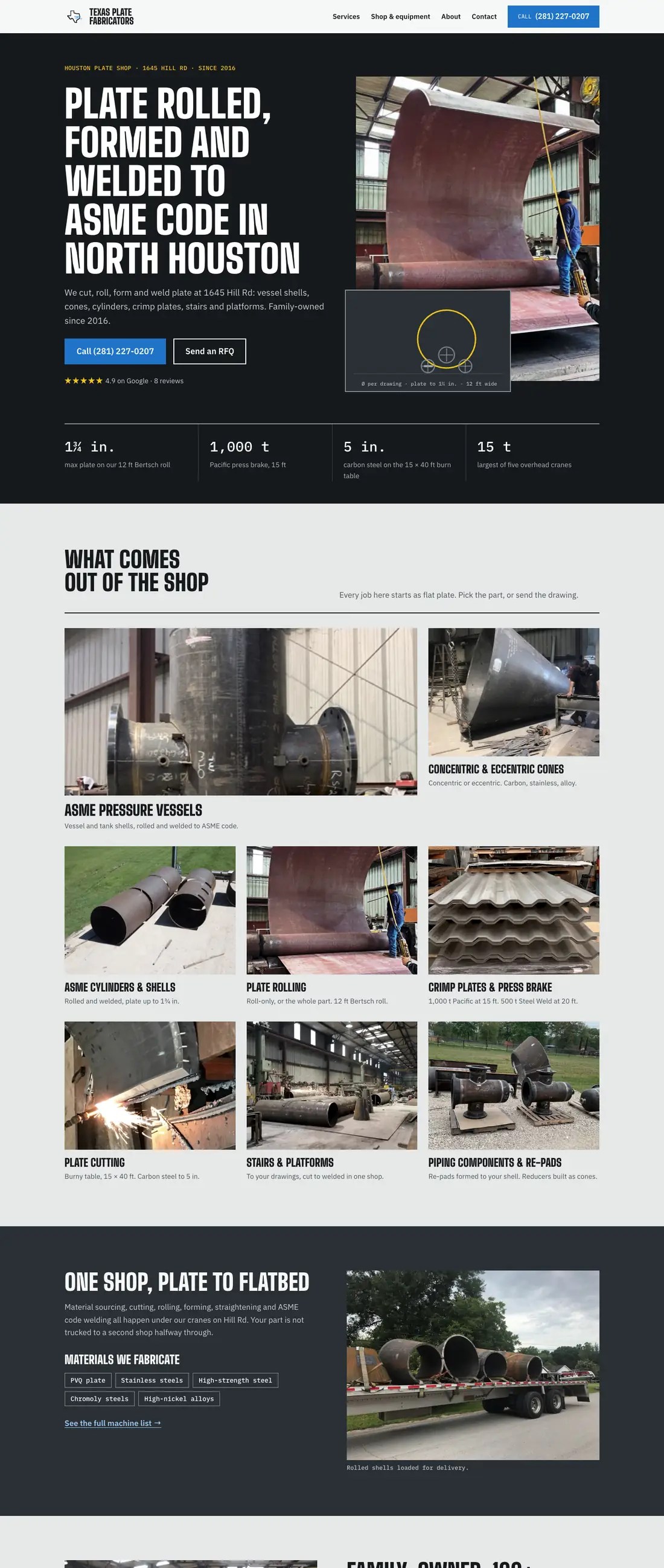
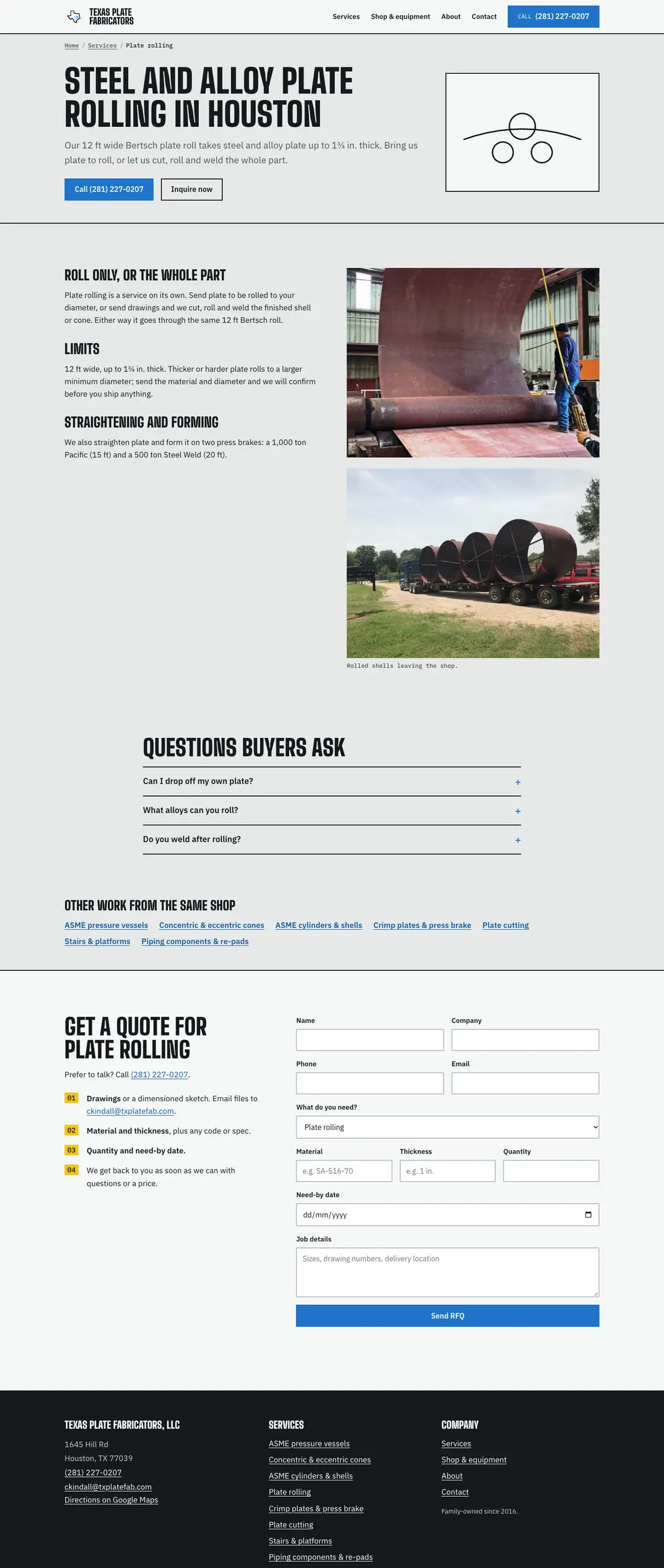
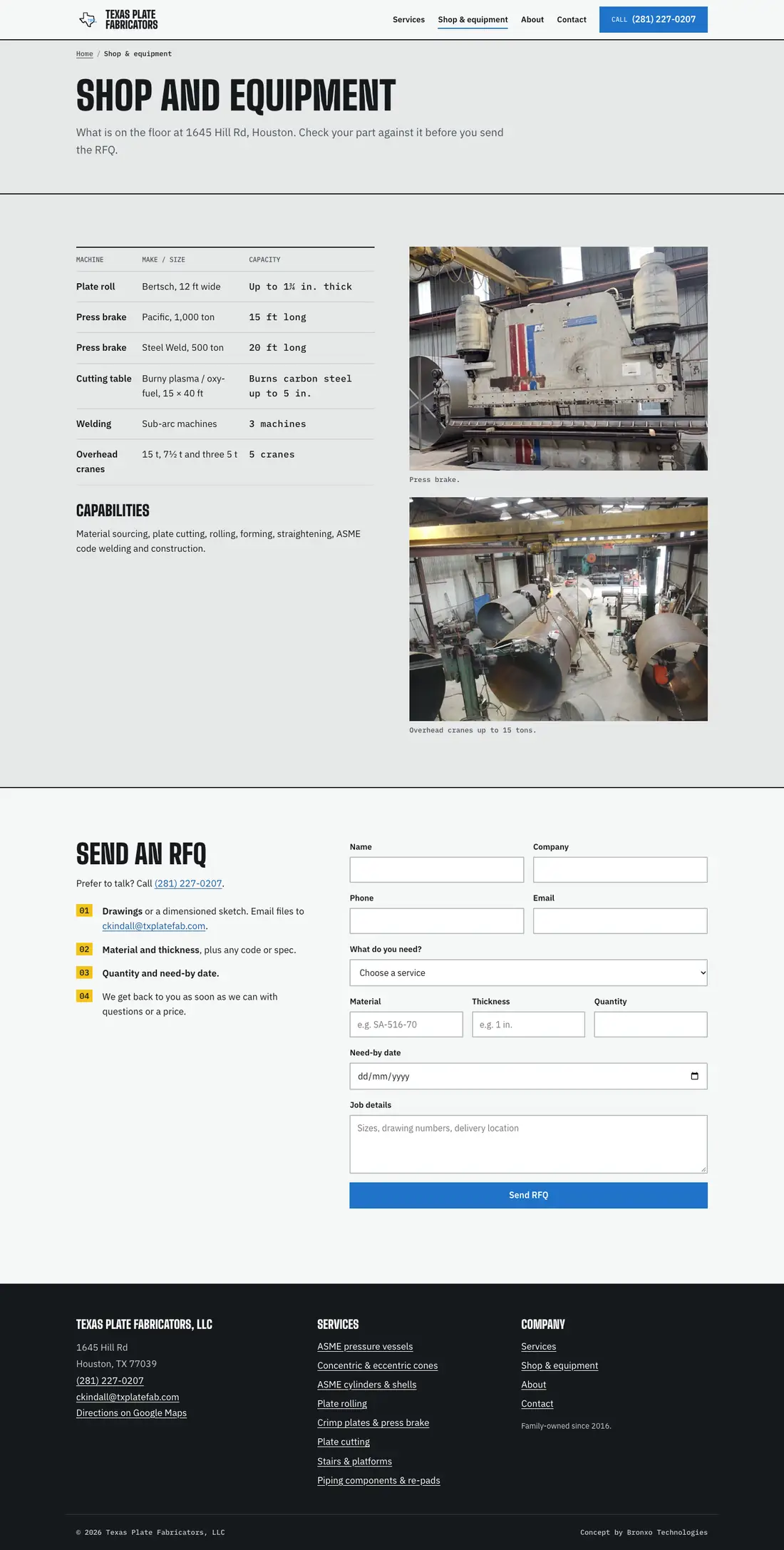
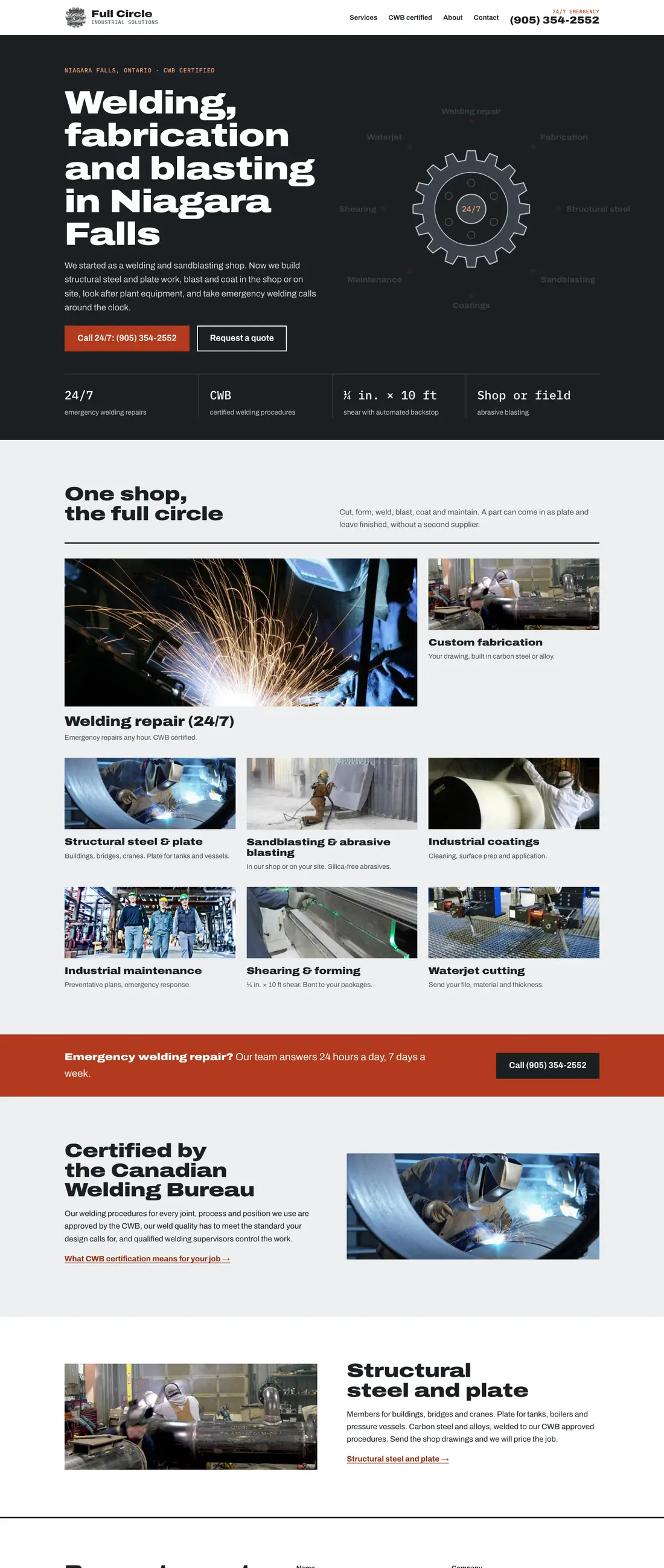
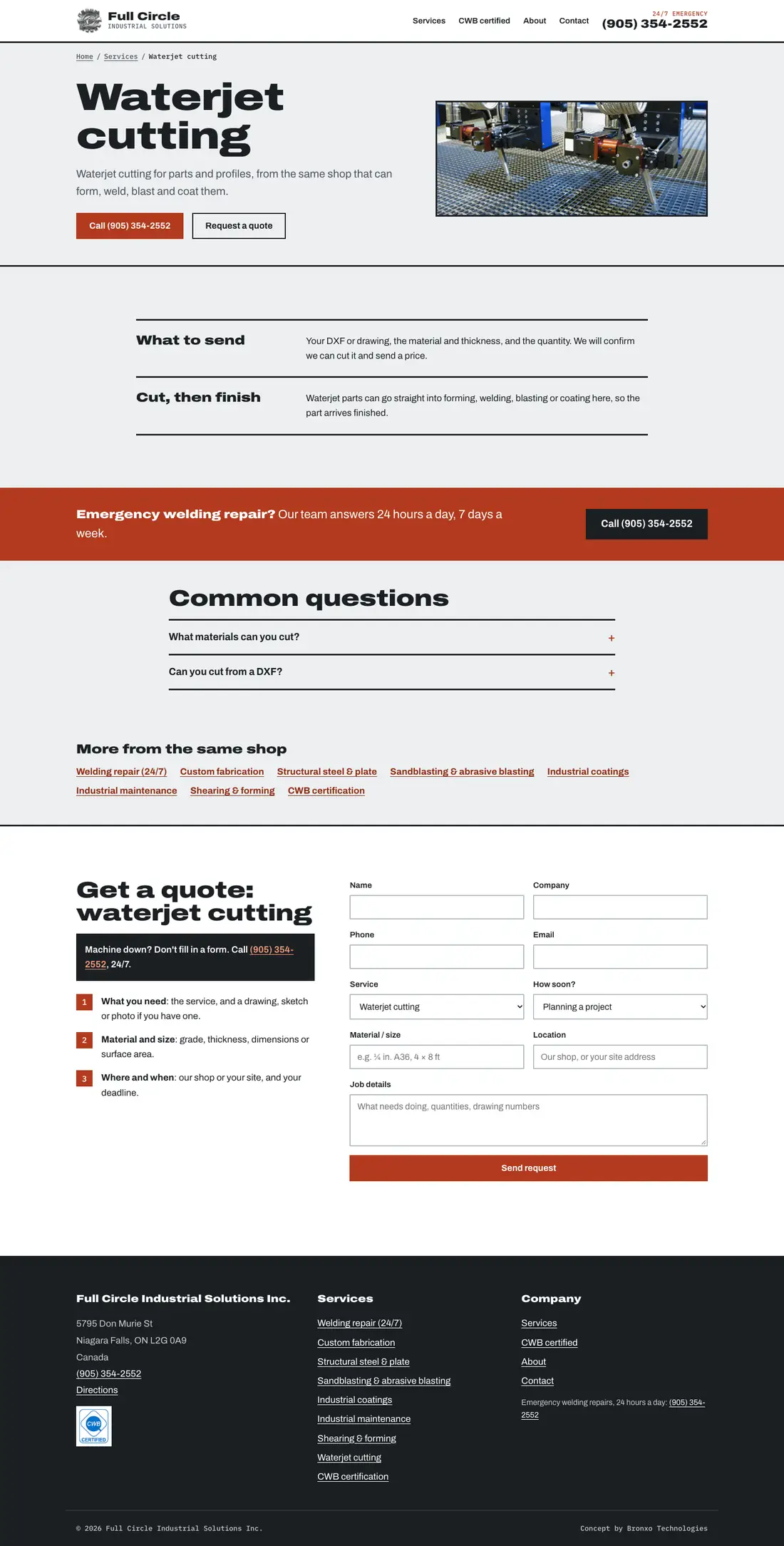
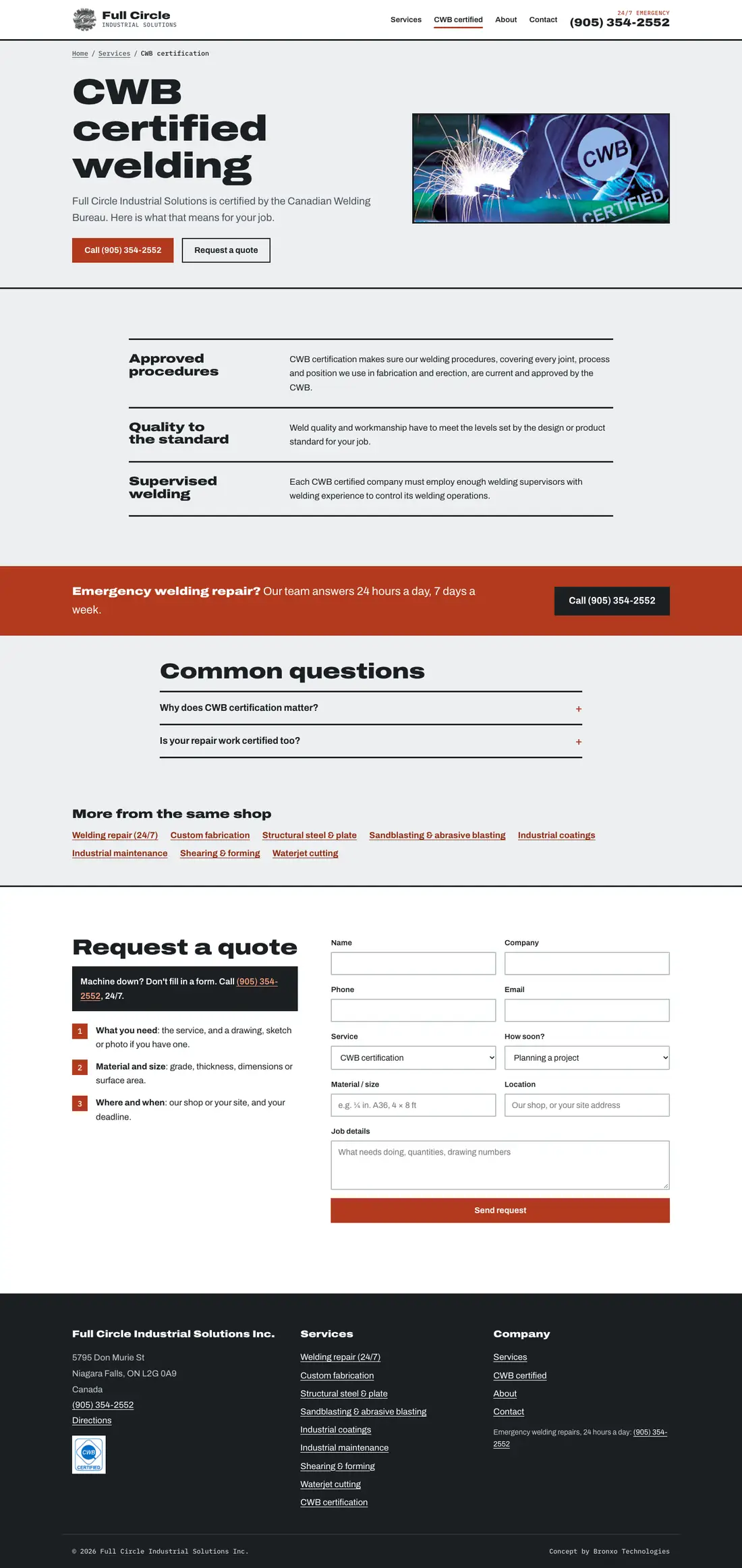
Concept redesigns we built from each company's own public website, to show the kind of site we make. Not client work. See them live: Texas Plate concept · Full Circle concept
Where to start: three fixes for this quarter
If you only do three things this quarter: list every machine with its envelope and axes, add the tolerances and materials you hold in production to each capability page, and put an RFQ form that takes STEP files on every page.
You'll see which pages bring in work
Every RFQ is captured by the RFQ Engine and tagged with its source. Your RFQ Report shows which capability pages, searches and campaigns bring in work, how fast your team replied and how many quotes you won. We agree an RFQ goal in month one and report against it.
Questions
Can a small machine shop really compete with instant-quote platforms?
Yes, on the work those platforms handle badly: tight tolerances, difficult materials, larger parts, assemblies and anything that benefits from an engineer's input. Your website should make those strengths obvious.
Should we list every machine?
Yes, with key specifications. Engineers use the list to decide if their part fits, and it's some of the most-read content on machine shop websites.