Buyers check your capacity: how thick, how long, what finish
Buyers sending sheet metal work look for capacity: how thick you can cut, how long you can bend, what you can weld and how you finish it.
They check cutting first: laser, punch, plasma and waterjet, by material and thickness, and sheet sizes. Then forming: press brake tonnage, bed length and tooling. Then welding processes and certifications, hardware insertion, and finishes such as powder coat, paint, plating and silk-screening.
They also look at the parts you're known for, typical quantities, and whether you can handle assemblies and kitting. Engineers value shops that give design-for-manufacturing feedback, because small changes to a sheet metal design can cut cost a lot.
Who buys this work
Sheet metal fabricators make enclosures, chassis, brackets, panels, cabinets, guards and structural parts for electronics, equipment, HVAC, food processing, medical, energy and many other industries. Buyers are OEM engineers and purchasing teams. They often want one supplier who can cut, form, weld, insert hardware, finish and assemble.
Much fabrication work is regional, because freight on bulky parts adds up. Buyers often search for fabricators near their plant, which makes local and regional SEO especially valuable.
Questions buyers ask, answered before they ask
What's the thickest steel, stainless and aluminum you cut and bend? What's your press brake tonnage and bed length? Do you insert hardware, weld, finish and assemble in-house? What quantities do you run best, and what's a typical first-article lead time? Answer these in writing and you skip the round of emails that usually comes before a quote.
Most fabrication websites show photos instead of capacity
Most fabrication websites show a photo gallery but never write down how thick they cut or how long they bend.
In our review of 4,547 core job shop and OEM websites, 56% showed no visible way to request a quote, and 38% had under 300 words of text on the pages we read.
The gallery problem is the biggest one. Fabrication sites often show dozens of photos and almost no written capacity. Buyers and search engines can't read thickness or bed length from a photo.
The second is the RFQ form. Sheet metal buyers send DXF and STEP files, often several at once, plus material, gauge, finish and quantity. A form that only takes a message forces a round of emails before you can quote, and some buyers won't bother.
Source: RFQ Foundry review of 12,382 US metalworking and manufacturing websites, Oct to Nov 2026. Core figures cover the 4,547 job shops and OEMs selling to other businesses. We read each homepage plus up to two About, Capabilities or Services pages. Read the report.
What we build and run for you
Capability pages for cutting, forming, welding, hardware and finishing, each with thickness ranges, sizes and equipment.
Product pages for what you make most, such as enclosures, chassis and brackets.
A design guide page that helps engineers send you easier, cheaper designs.
Local and regional SEO for the area you ship to, and an RFQ form that takes several DXF, STEP and PDF files at once.
Monthly articles on the Manufacturers and OEMs package, on enclosure design, material choices and finishing.
Articles we'd write in your first three months
Typical articles we'd publish in your first three months, chosen from what buyers of this work search for. Each one ends with a quote prompt:
- Sheet metal enclosure design guidelines that cut cost
- Choosing a gauge and material for brackets and chassis
- Powder coat, paint or plating: finishing options compared
- Hardware insertion: what to specify on your drawing
- Laser, punch or waterjet: which cutting process fits your part
What a page like this looks like
The Texas Plate concept on this page lists every machine with its real capacity, such as press brake tonnage and length. A sheet metal site built the same way answers a buyer's first questions in seconds.
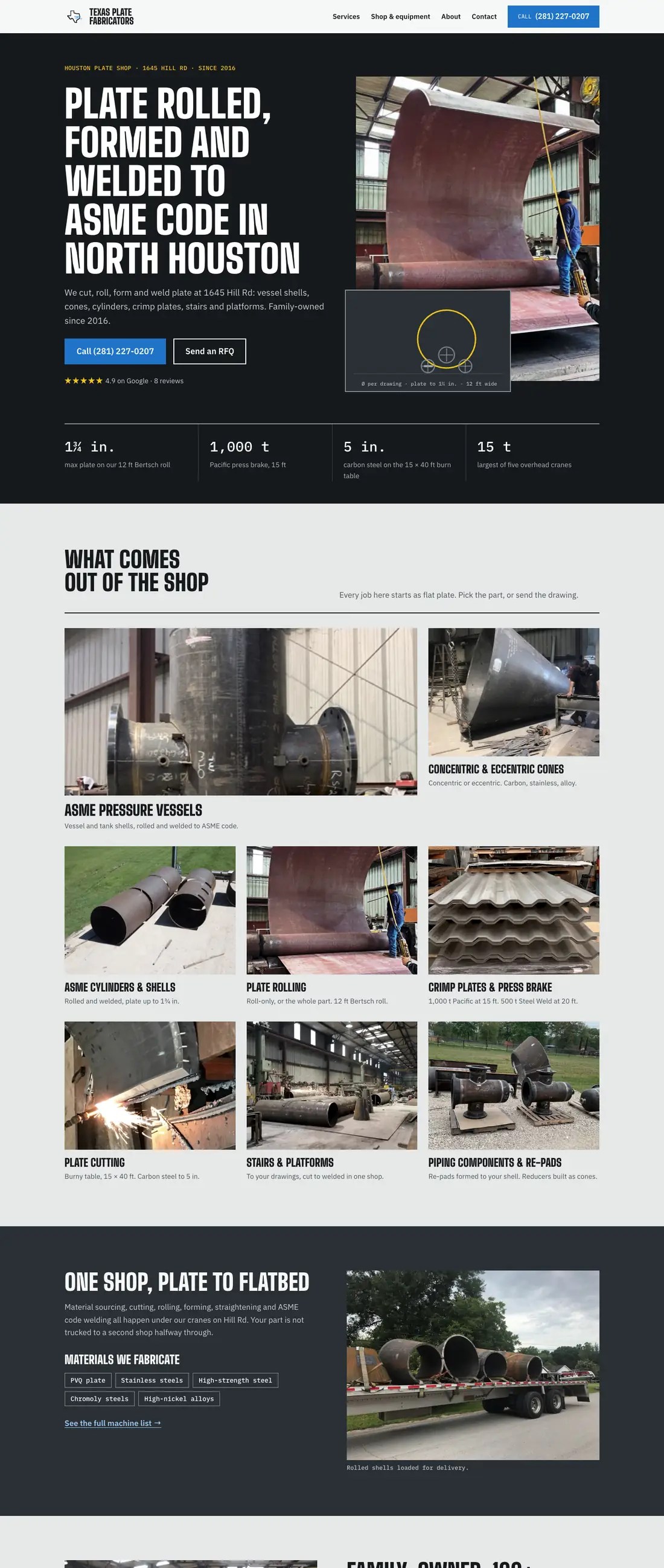
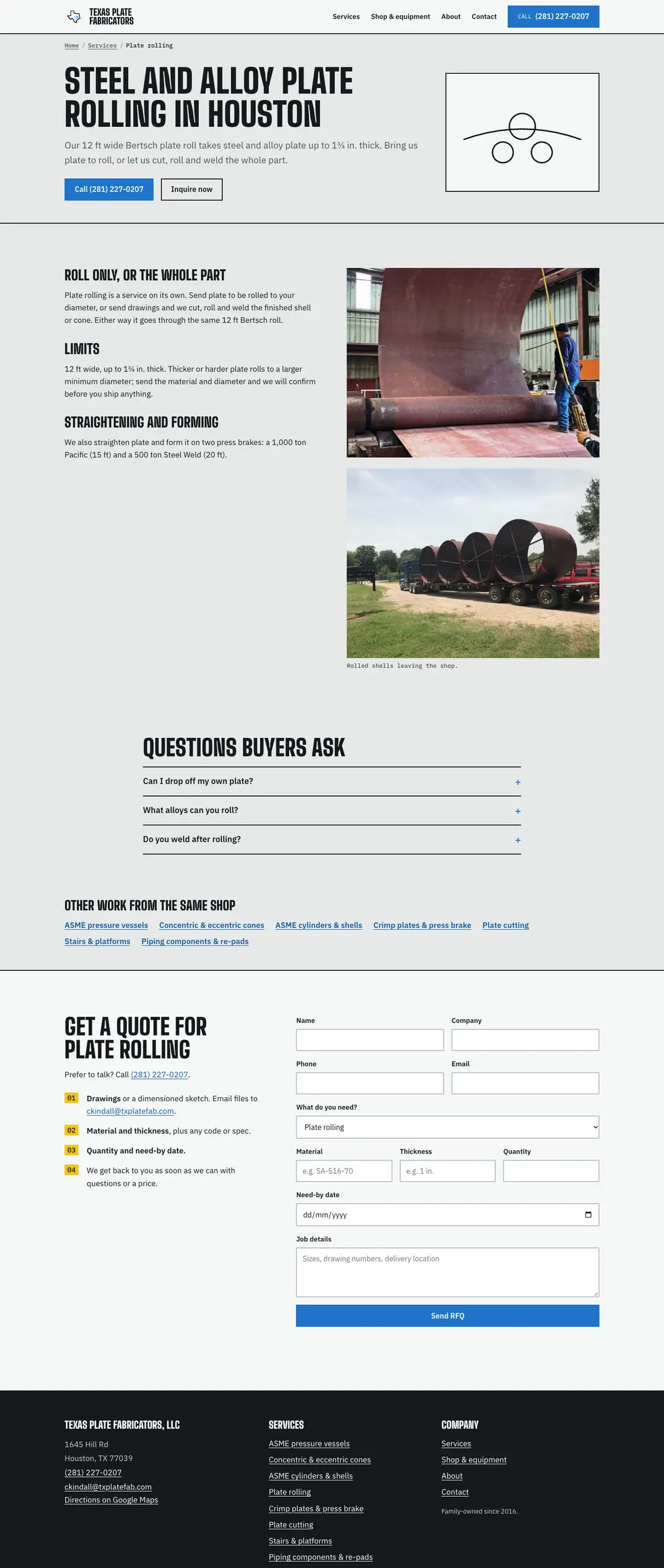
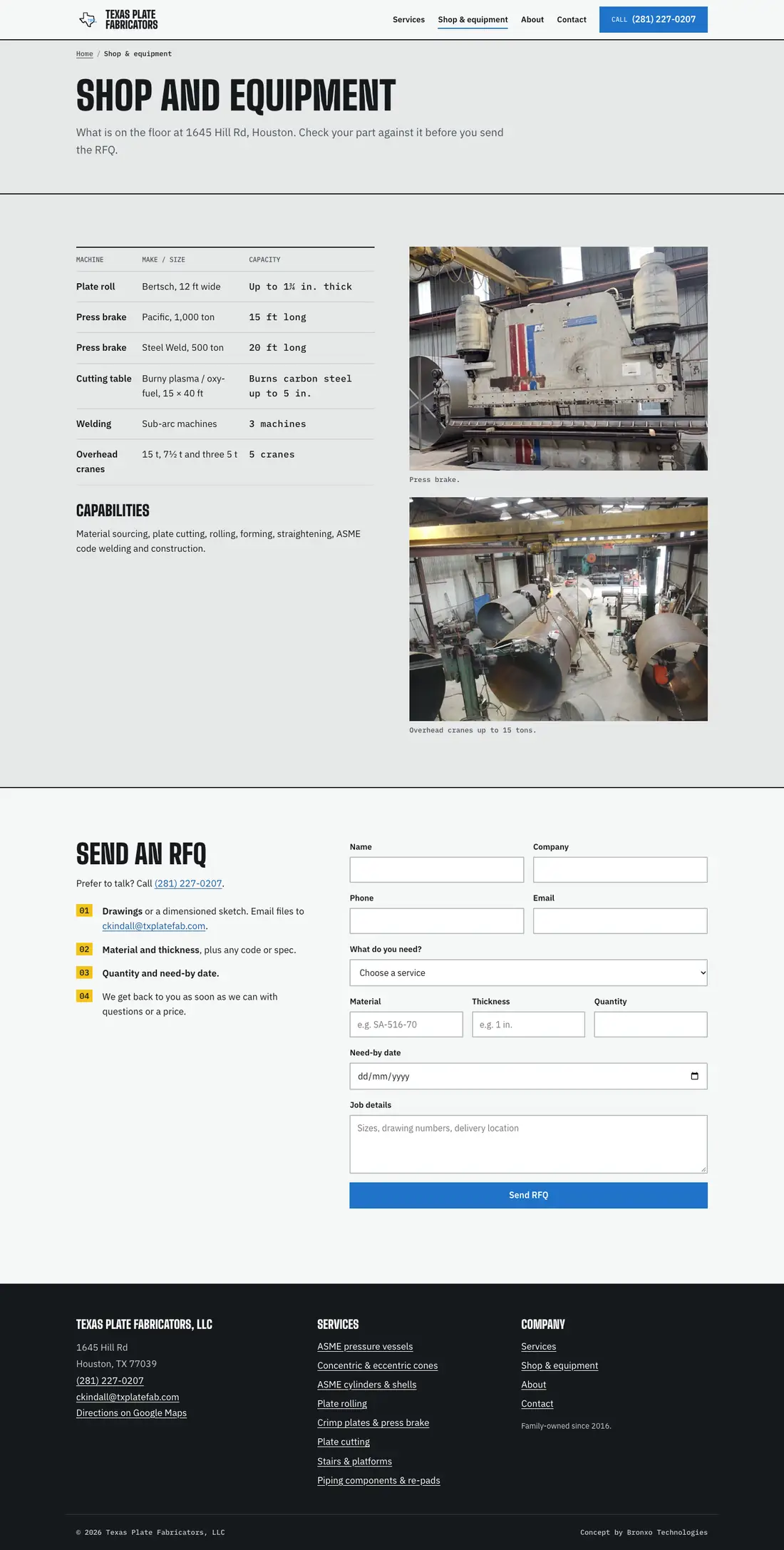
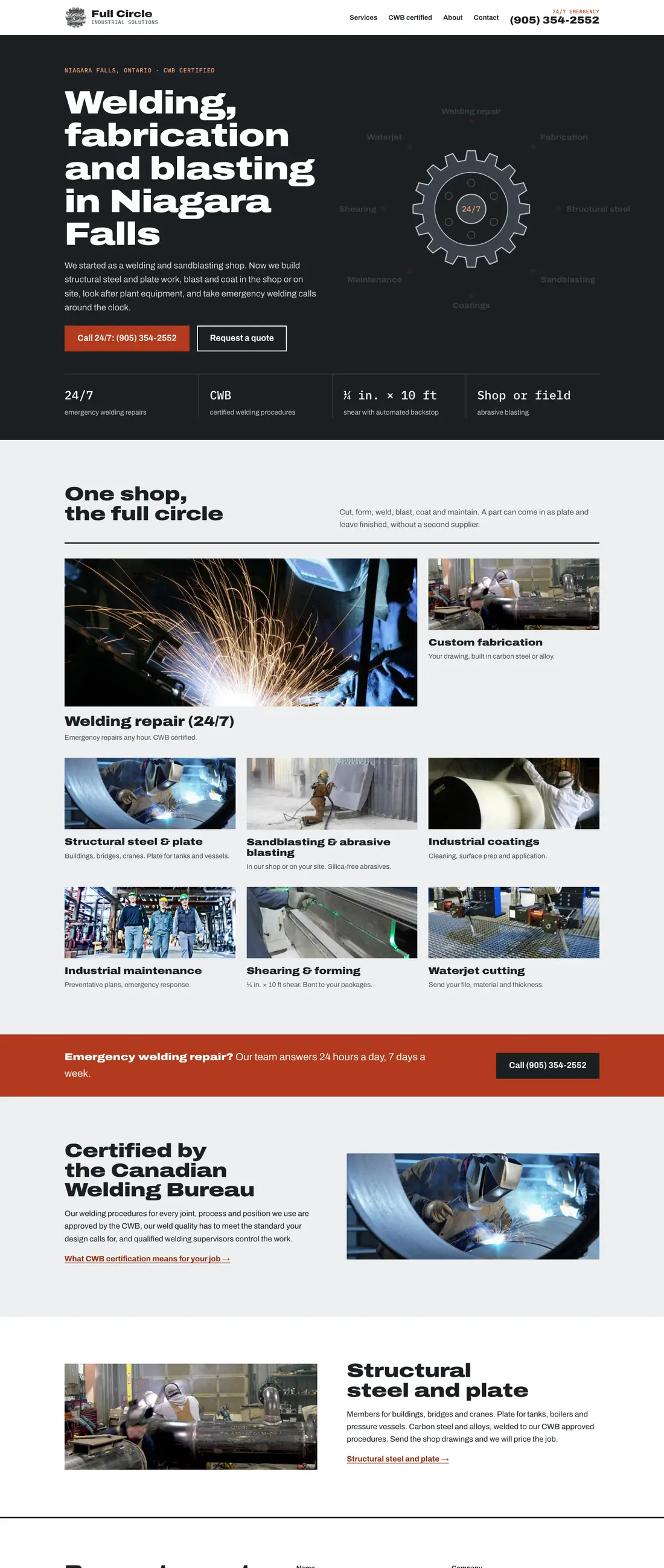
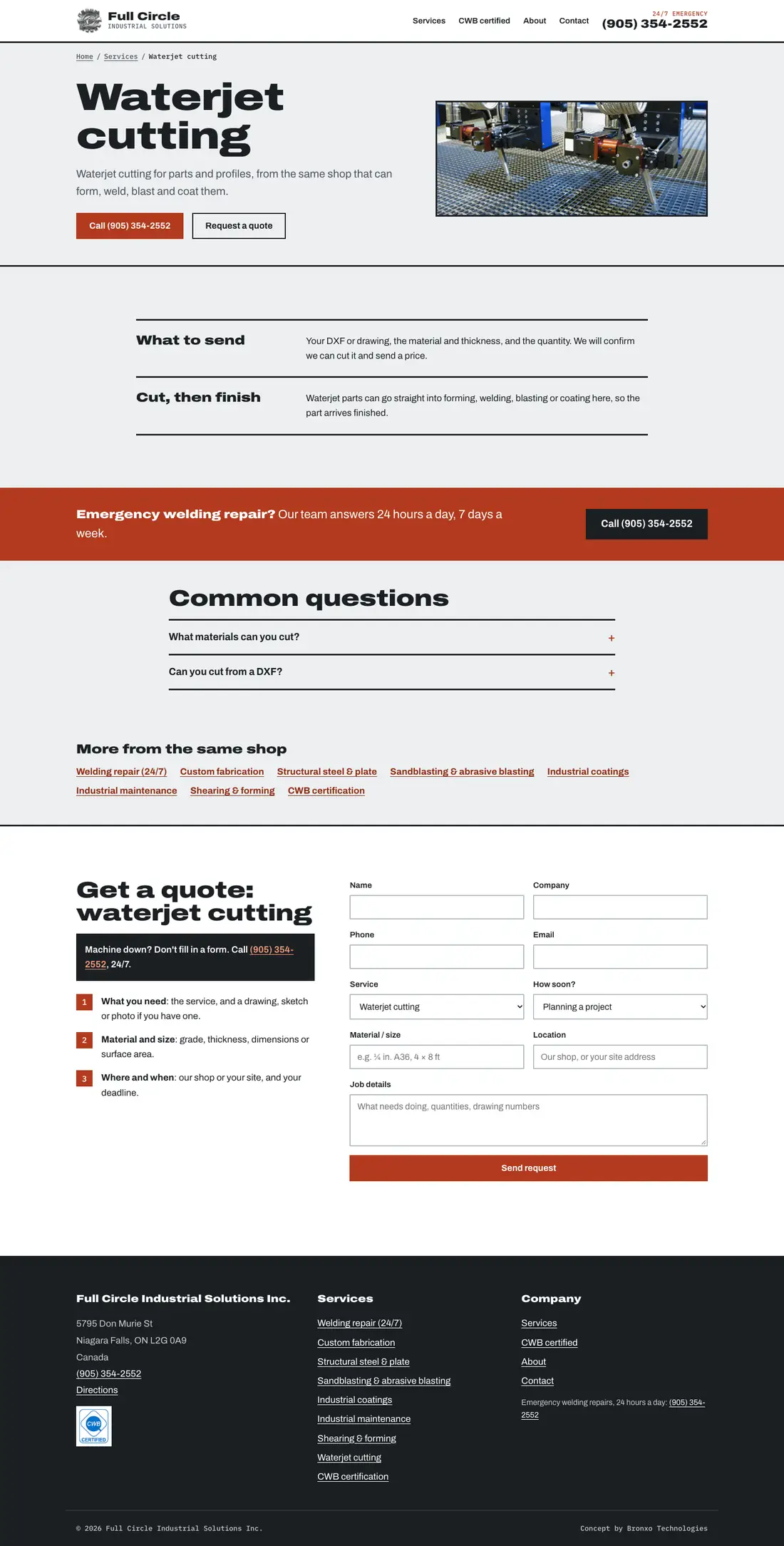
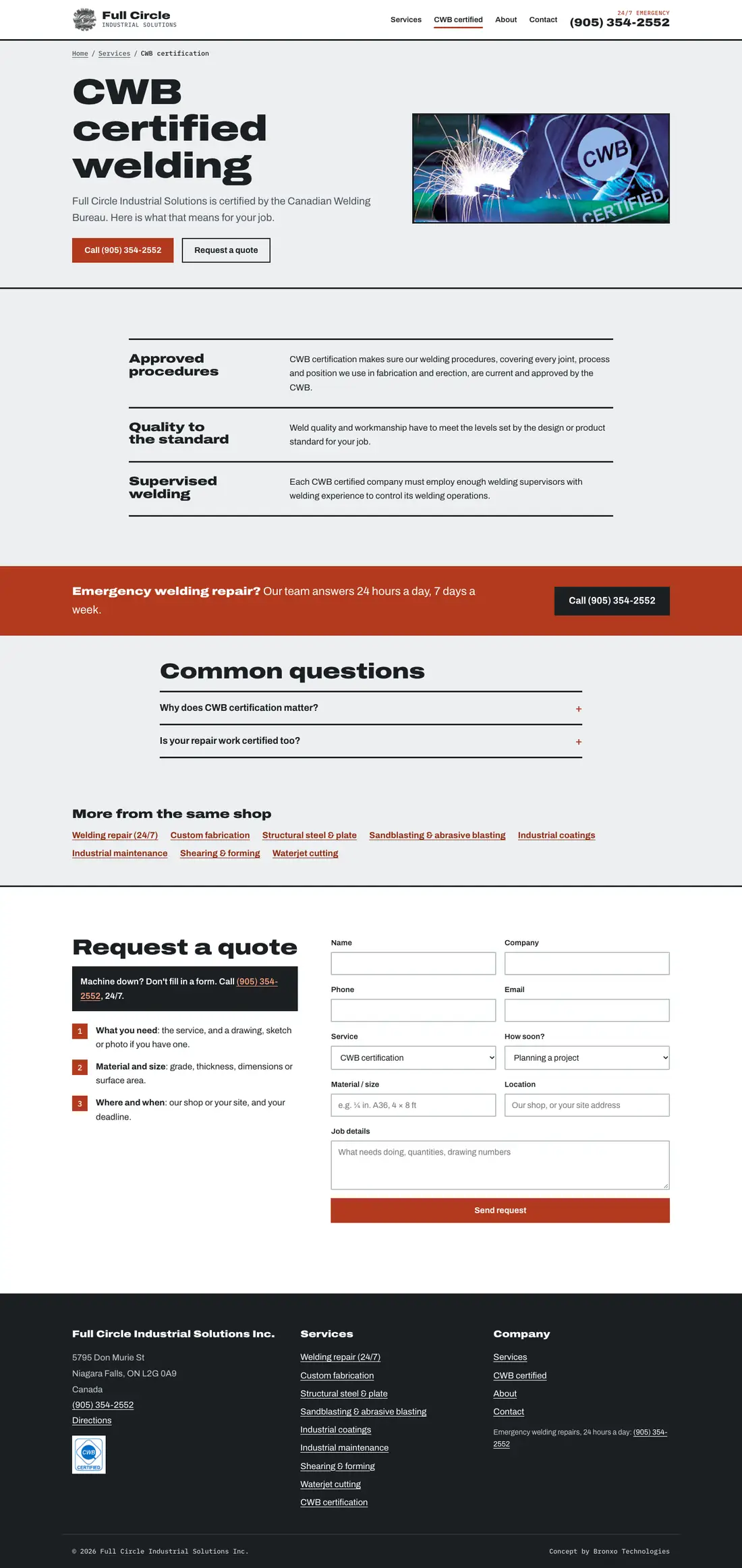
Concept redesigns we built from each company's own public website, to show the kind of site we make. Not client work. See them live: Texas Plate concept · Full Circle concept
Where to start: three fixes for this quarter
If you only do three things this quarter: write your cutting and forming capacity out in numbers, add an RFQ form that takes several DXF and STEP files, and publish one enclosure design guide.
You'll see which pages bring in work
Every RFQ is captured by the RFQ Engine and tagged with its source. Your RFQ Report shows which capability pages, searches and campaigns bring in work, how fast your team replied and how many quotes you won. We agree an RFQ goal in month one and report against it.
Questions
We do both sheet metal and machining. One site or two?
One site with separate capability pages almost always works better. Buyers like suppliers who can do more of the job.