Engineers start with alloy, process and weight range
Casting and forging buyers start with alloy, process and weight range, then look at tooling, machining and testing. Lay it out in that order and they'll send the drawing.
They check the processes you run (sand, investment, permanent mold or die casting; open-die or closed-die forging), the alloys you pour or forge, and the weight and size range for each. They look at pattern, tooling and die making, finish machining, heat treating, and testing such as radiography, ultrasonic and mechanical testing.
They also look at quality systems, industry experience, and lead times for tooling and first parts.
Who buys this work
Foundries, die casters and forging companies supply near-net-shape parts to almost every heavy industry: pumps and valves, energy, mining, agriculture, transportation, defense and industrial equipment. Buyers are design engineers choosing a process and purchasing teams looking for capacity or a domestic source.
Many buyers are deciding between casting, forging, fabrication and machining from solid, so they search for guidance as much as for suppliers. Shops that help them choose tend to get the RFQ.
Questions buyers ask, answered before they ask
Which processes and alloys do you run, and what weight and size range for each? Do you make patterns, tooling and dies in-house? Do you machine, heat treat and test parts before they ship? What's the lead time to first parts, and to production? Which industries and part types do you know best? Answering these turns your website into a guide engineers come back to.
Most foundry websites list processes without alloys or weights
Most foundry and forging websites never list alloys, weight ranges or testing, so engineers can't compare them.
In our review of 4,547 core job shop and OEM websites, 56% showed no visible way to request a quote and 69% named no certification on the pages we read.
Foundry and forging websites often list processes without alloys, weight ranges or testing, which are exactly the details an engineer needs to choose between casting, forging and machining.
Many also miss the chance to guide. Foundries and forgers have deep expertise that never makes it onto the website. Writing it down makes you the obvious supplier to ask for a quote.
Source: RFQ Foundry review of 12,382 US metalworking and manufacturing websites, Oct to Nov 2026. Core figures cover the 4,547 job shops and OEMs selling to other businesses. We read each homepage plus up to two About, Capabilities or Services pages. Read the report.
What we build and run for you
A page for each process and alloy family, with size and weight ranges.
Pages for tooling, machining, heat treating and testing, so buyers see they get a finished part.
A process comparison guide that helps engineers choose between casting, forging and machining, and positions you as the expert.
Monthly articles engineers search for, such as investment casting versus sand casting, how to design a part for forging, and how to plan tooling lead times.
Articles we'd write in your first three months
Typical articles we'd publish in your first three months, chosen from what buyers of this work search for. Each one ends with a quote prompt:
- Investment casting or sand casting: how to choose
- Designing a part for forging
- Casting versus machining from solid: cost and lead time
- How tooling and patterns affect your first-part lead time
- Testing options for castings and forgings
What a page like this looks like
In the concept sites on this page, every capability page opens with what the shop does and its limits in numbers, then a clear way to send drawings. A foundry or forge site built the same way opens each process page with alloys, weights and sizes.
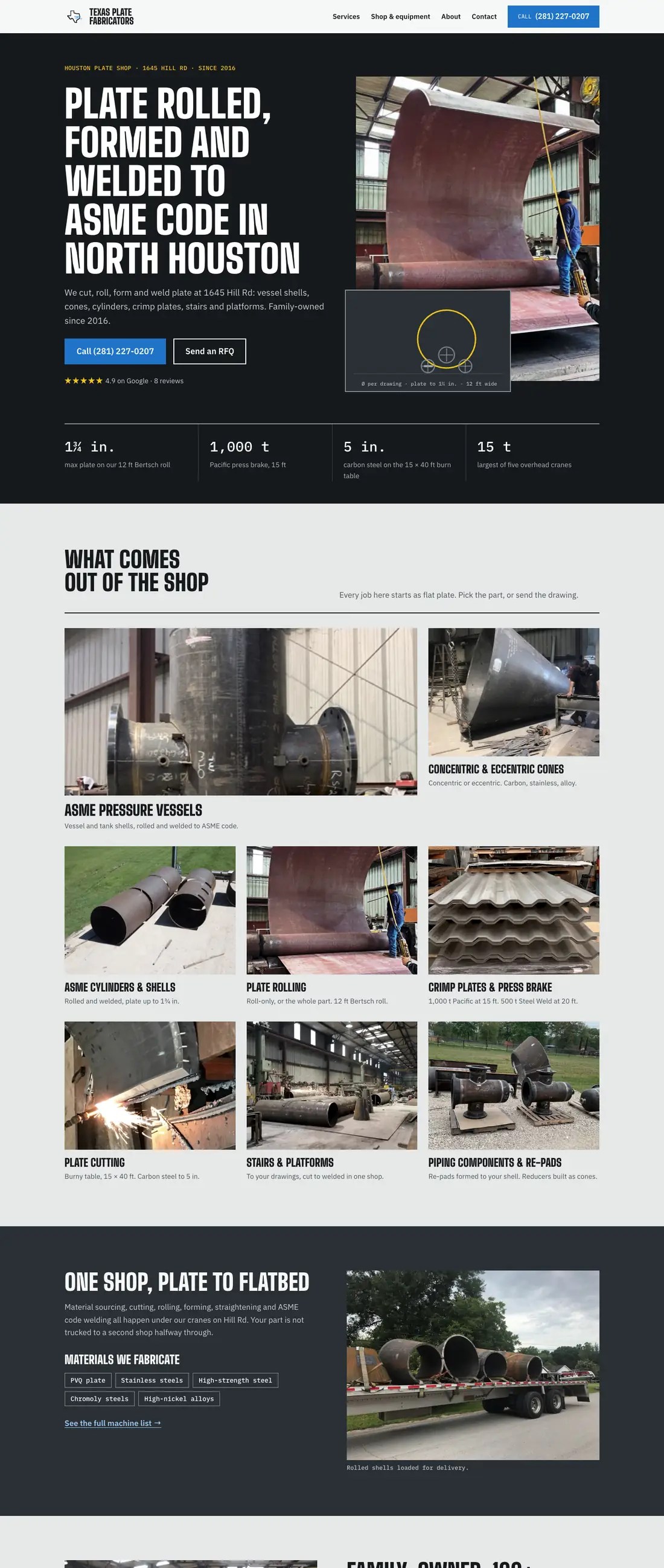
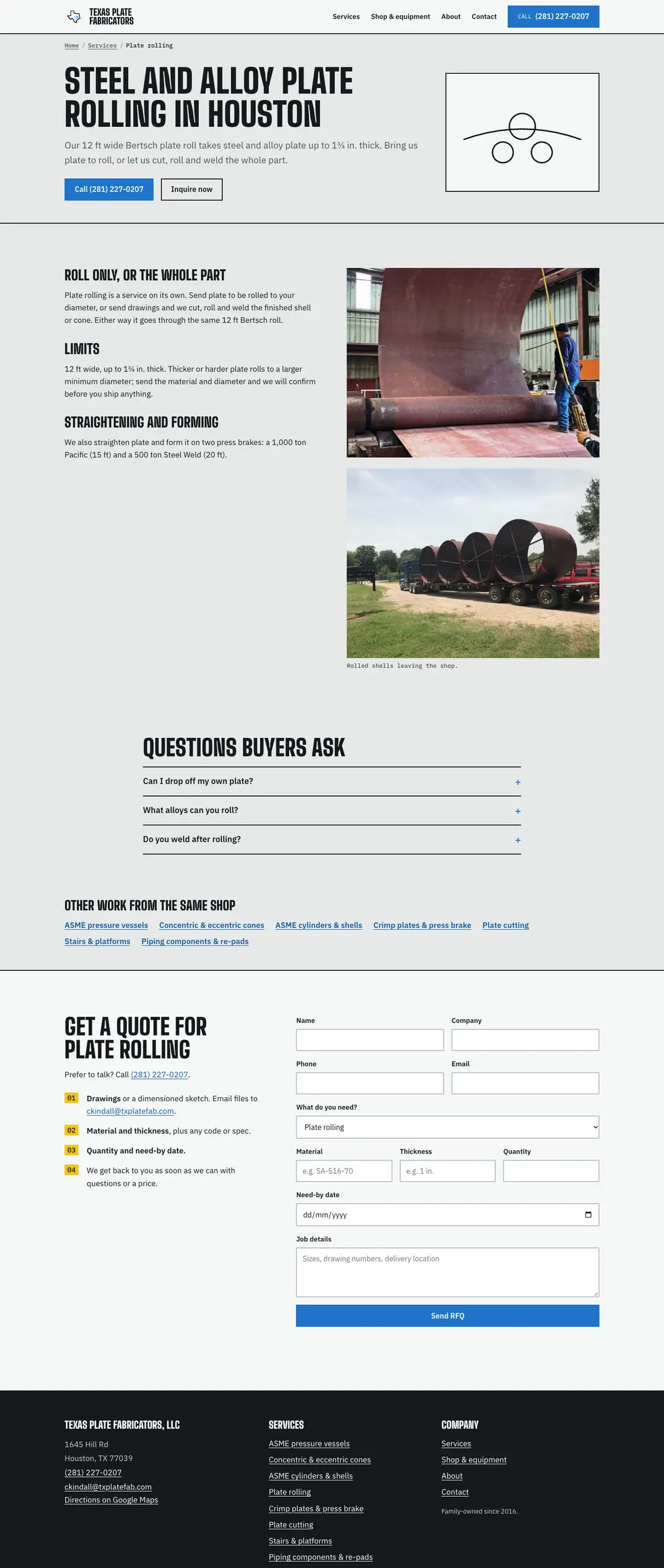
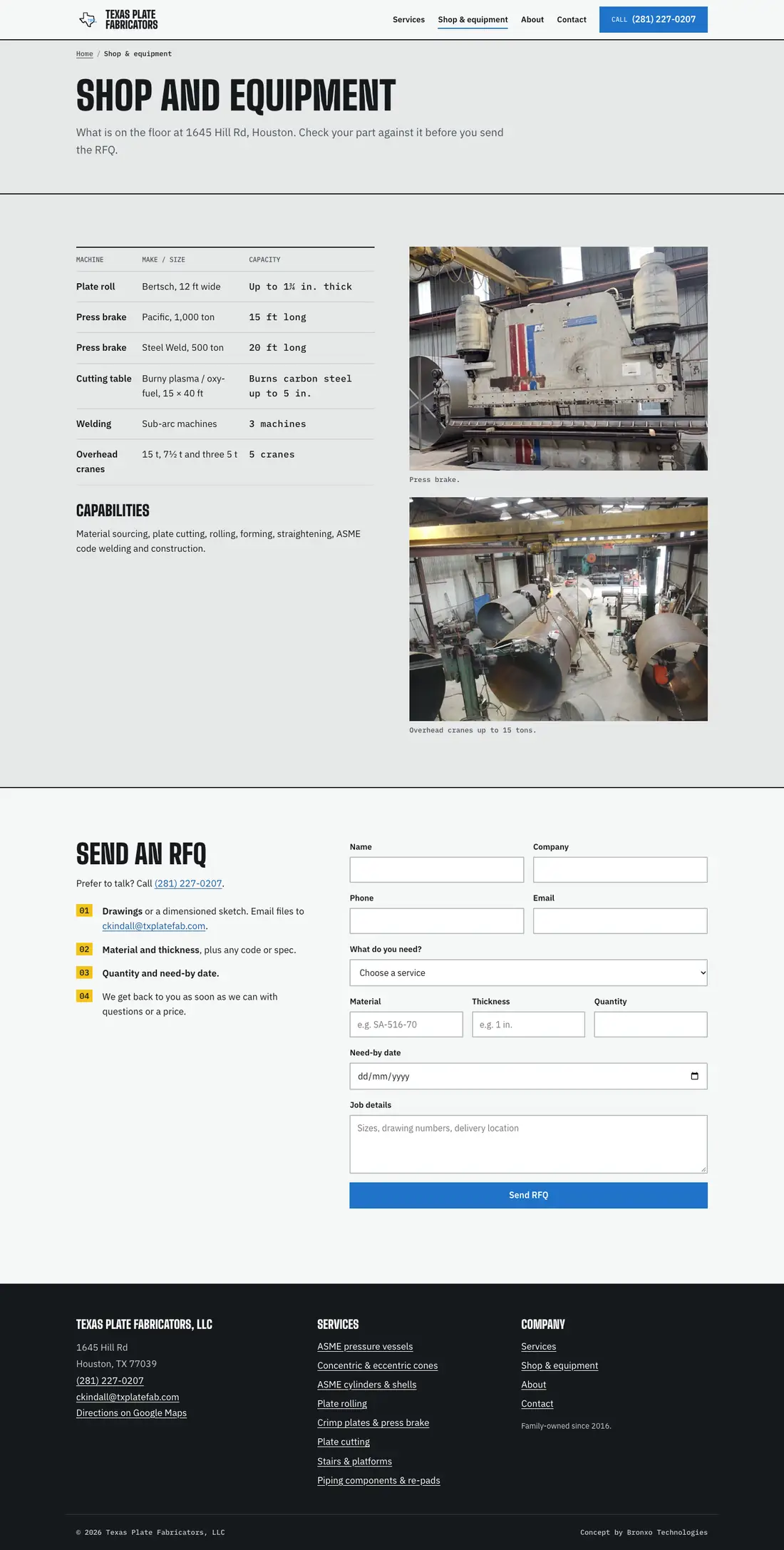
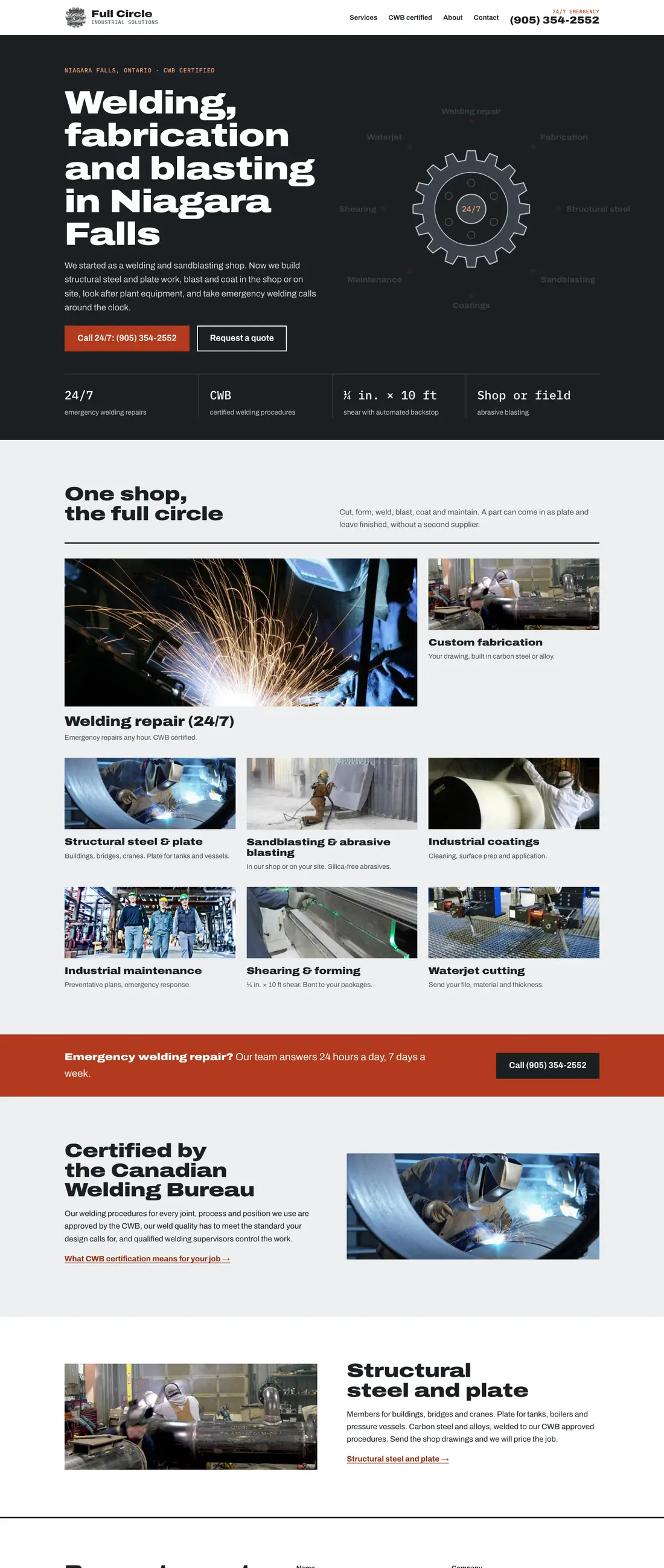
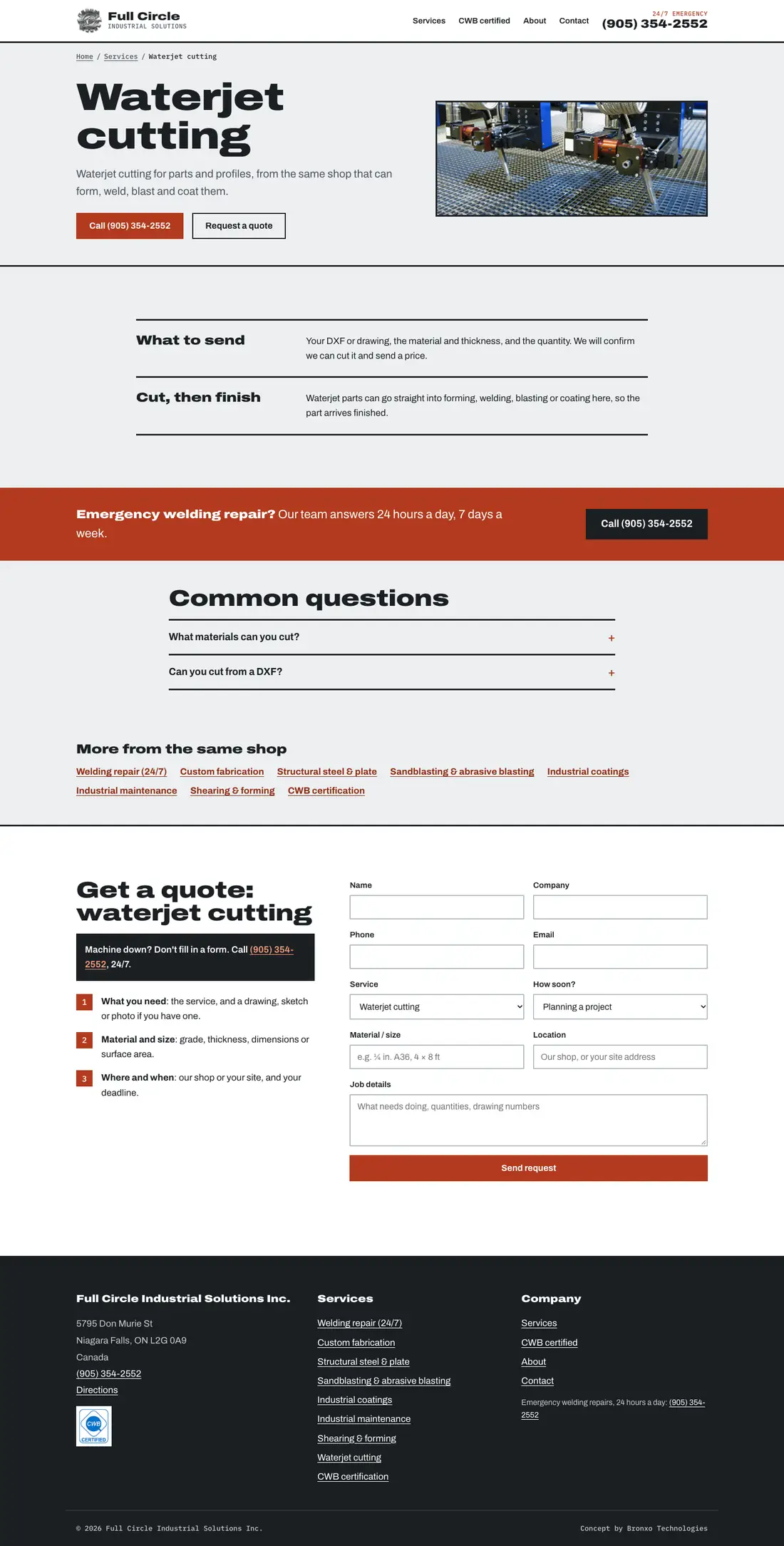
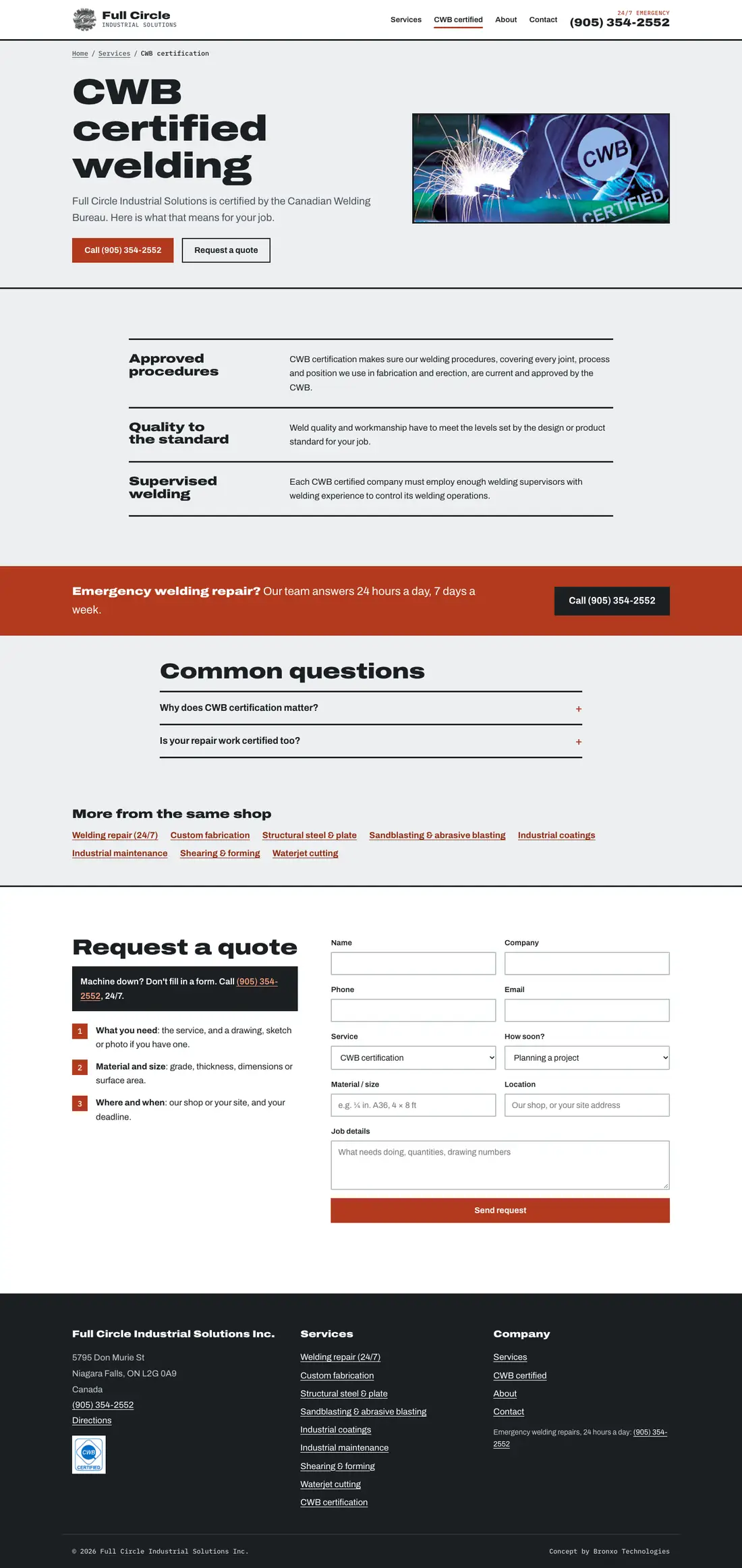
Concept redesigns we built from each company's own public website, to show the kind of site we make. Not client work. See them live: Texas Plate concept · Full Circle concept
Where to start: three fixes for this quarter
If you only do three things this quarter: publish a page for each process with alloys and weight ranges, write one guide comparing casting, forging and machining, and make your RFQ form ask for alloy, weight and annual quantity. The RFQs you get will be complete and much easier to quote.
You'll see which pages bring in work
Every RFQ is captured by the RFQ Engine and tagged with its source. Your RFQ Report shows which capability pages, searches and campaigns bring in work, how fast your team replied and how many quotes you won. We agree an RFQ goal in month one and report against it.
Questions
We sell mostly through distributors. Is this still worth it?
Yes. Distributors and their customers both check your website, and clear capability pages make it easier for distributors to sell you.